Episode Transcript
[00:00:03] Speaker A: Hello, and welcome to the Consulting Specifying Engineer podcast. I'm your host, Amara Rosgas, and today we're talking with Casey Crown with Reliable Controls about the role of women in the H Vac industry.
Thanks for joining me, Casey.
[00:00:20] Speaker B: Thanks for having me.
[00:00:22] Speaker A: Yeah, yeah. Well, let me tell you a little bit about today's guest.
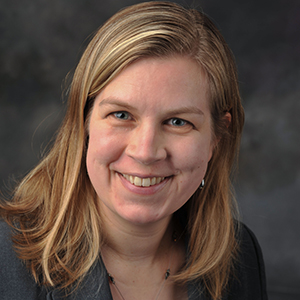
Casey Crown is the business development executive, CA for reliable controls. She's based in Boise, Idaho. With more than 17 years of experience as a contractor in building automation, Casey brings a wealth of knowledge across engineering, project management, sales, and technical leadership. Her journey began as an engineering assistant and has since grown into a business development executive where she focuses on building strategic partnerships to drive innovation and change in the H Vac industry.
You've seen a lot over the past several years, Kasey, and from your perspective, how has the role of women in the H Vac industry evolved over the years? And is there anything that really stands out for you?
[00:01:14] Speaker B: Absolutely. I think the number one thing that has changed over the years is just the more the volume of women in the H Vac industry and then also the visibility.
And then a large part of that is thanks to social media like LinkedIn or even people starting podcasts like this where we're having discussions about the roles for women in the H vac industry.
Another thing I've also noticed is the collaboration between women. I feel like in the past, there was always the competitiveness of being the one woman in the room, and now what I'm seeing is women are realizing that they need to build their networks out and they need to build up their colleagues and bring more women to the table to make change that lasts for a long time.
Another big one I've seen is the assistance of allies in our field.
We see men and leadership who are finding out that there is a business case for recruiting and retaining women in the H Vac industry.
We have a huge shortage coming ahead in our workforce, a big gap, and women, and even young folks and young engineers are going to need to fill that gap sooner than later.
And then I think we also noticed that women bring a balance to the culture in offices and then on job sites that I think in the past felt more like a boys club and hard to break through. And. And I'm seeing a lot more collaboration there, a lot more invitations to be involved in projects and to go on job sites and people that are just generally more welcoming to women and then also just young engineers in general.
[00:03:12] Speaker A: So, Casey, you've touched on a lot of things here that I want to talk about. So let me say. Yeah. What are some of the biggest challenges that women are facing in H VAC today?
How have you personally navigated them or have you experienced these challenges yourself?
[00:03:32] Speaker B: So I think the biggest challenge is we desperately need women to enter today technical roles and then more leadership roles.
And that is directly tied to, you know, bringing more women into the industry. And what I, what I noticed is that when you're, when women are not in those technical roles or in leadership roles and they, they are in the industry as more of an admin, they're not the ones making the big decisions and they're not helping firms look at both sides of the experience for tenants and building owners.
And I, I just think we desperately need more visibility there and we need more mentorship.
Because when I was out recruiting for young engineers as, as a contractor, I had several women come up to me and say they never would have approached my booth had there not been a woman there.
So bringing women into hiring management positions and then also into those more technical roles is really going to be key, I think, moving forward in the future.
And then we really, really need to have the mentorship not just for women, but for young engineers in our industry.
Making time for mentorship and having a mentorship program in place is really going to be key in passing along this knowledge that we've learned through years of experience. But the way that the world is moving is so quick.
We really need to pass that knowledge more efficiently and then get people up to speed much more quickly to keep business moving as usual.
[00:05:27] Speaker A: And this is a topic near and dear to my heart. I don't think there's enough mentoring in the industry. So what kind of strategies have you found most effective in supporting junior team members, especially women?
[00:05:41] Speaker B: Well, really, it's about making the availability and it is a big, it's a huge sacrifice.
You gotta schedule times, you've gotta offer coaching or mentorship.
And then also without burning yourself out right for your own pursuits in your own career, but also keeping yourself curious and really reflecting on things that you did in the past and ways that you could really help young women or young engineers as they navigate through this career.
And part of that is taking them out on job sites, really bringing them under your wing on a project, and thoroughly explaining, you know, why we're doing what we're doing, not just how to do it, but okay, this is the reason why we do things this way because in the past we've seen it creates, you know, better collaboration and a better end result for a project or overall you know, sustainability for everybody in the built environment. So and then I think also just being really humble about it and sharing your past mistakes. I think in the, this industry in the past, it was very much, you know, we don't talk about past mistakes, but I think sharing your past mistakes and sharing why that was an important part of your career or how that helped you shift your mindset is just really important. And I believe, you know, the young engineers that we are seeing today really appreciate that, you know, there's, it's not a zero sum game, that there's flexibility and there's an opportunity to learn and, and to not just enter this industry, but to thrive in the industry.
Yeah.
[00:07:28] Speaker A: And I think that's good across every industry, not just H Vac.
[00:07:32] Speaker B: Oh, yeah, for sure. Yeah, yeah.
[00:07:34] Speaker A: So you talked about this. You said it's great to have someone who looks like you when you're trying to attract a woman or someone else into H Vac or an engineering role or something like that. But what other practical steps can companies take to attract and then retain more women in H Vac engineering?
[00:07:56] Speaker B: Yeah. So I think on the recruitment side, having a woman on the hiring committee or having a woman who is a hiring manager is absolutely essential for every single firm from here on out. And the reason why is because women are, at least in my experience, I was able to combat biases as we were reviewing, reviewing resumes or going to career fairs and having that initial talk with young engineers and women.
I sat through too many of these conversations with men who have really great intentions but would ask questions like, well, has she ever held a drill as would she be able to go on a job site? Would her shoes work there? And not realizing that these are very, they never would have asked these questions of men in the industry who have had experience or even, you know, men who, you know, have the bias of, you know, more attention or more skills with their hands.
So I think combating bias right at the get go, making the hiring practice more fair and equitable, but to retain them, we also need to talk about bringing in equitable policies.
And a huge one of this, and I'm glad I'm seeing the shift, is paternity leave. So it benefits men, but on the other side of that, it actually benefits women just as much because what we're doing is we're shifting the idea of who the default parent is in conversations.
And then also just in society, it's able to help women to bring a balance at home, which will help them bring balance to their career.
We Also see like the work from home policies.
As a young person in my career with a young family, all of my sick leave was not my sick leave. It was actually my children's sick leave when they were fighting colds through preschool and kindergarten.
And so the ability to be able to be at home with a sick child and also be able to share that responsibility with your spouse or your partner is just a really great way to not only support women, but also support young families and young engineers early in their career.
[00:10:29] Speaker A: I hear you. I think companies are taking that to the next step, like you said. That's good.
[00:10:34] Speaker B: Yeah.
[00:10:36] Speaker A: So Kasey, let's take a step back here and kind of look at a bigger picture, looking at innovations or trends. What are you seeing in control systems for building engineering? What's exciting you in the industry?
[00:10:50] Speaker B: So I think what's really exciting innovation wise, is going to be a call for folks to get on board with understanding networks and networking.
You know, the idea that we can now have cloud hosted platforms and then accessibility across different platforms through APIs is really going to be a game changer in how buildings are running. And then also the incredible amount of data at our fingertips, you know, looking at weather services or looking at our energy management tools directly from the utilities on peak usage, it's really going to make a big change in how we look at a building not just as routine sequences, but customizable sequences and then also sequences that make sense for long term sustainability, but also the tenant comfort and improvement.
AI, of course, is another big one of those coming forward. I think the initial benefit of AI is going to be creating workflows to improve building performance and workflows to improve field performance for engineers and for technicians in the field.
And then also the digital twinning and modeling capabilities, especially on the design side, being able to take a look at, you know, not just a guesswork, but seeing things in action and seeing how all these systems work together to improve the life, the life cycle of the building, to improve tenant and comfort, to make a building more flexible for owners and when they're trying to attract new and exciting tenants.
And then I think the biggest trend, which is kind of interesting in my opinion, is the, is almost like a refocus in our industry and looking at people, we're looking at investment in people as far as training them up, mentoring them, but we're also looking at being tenant focused from the owner's perspective and the contractor's perspective, where we're looking at tenant comfort, making things more buildings, more flexible spaces, more flexible but also looking out for their.
The occupant health in a building, the occupant productivity in a building.
And then also I'm really excited to see this is that owners and operators are taking a lot more or feeling more empowered and engaged with building automation systems overall.
And what I'd love to see in the future is continuing that curiosity, continuing that empowerment, and really having all the design and consulting engineer and architect working hand in hand with a building automation contractor and really developing a system that isn't just the lowest bid, but something that is really usable for the owner in the future so that they can scale their portfolio more easily or that they can attract new and exciting tenants and also retain those tenants long term.
[00:14:17] Speaker A: All good things to think about for the future. That is awesome. Thank you.
[00:14:22] Speaker B: Yeah.
[00:14:23] Speaker A: I'm going to take a left turn here with this next question. Let's talk about music.
Favorite live music. Like, what recent concerts have you been to? What has made it super cool?
[00:14:37] Speaker B: I love live music because it's just. There's something transformative about it. There's a shared experience.
My absolute favorite live music experience has got to be.
I went to a volbeat concert with my. With my friend and we're dancing our hearts out in the stands, and all of a sudden we get tapped on the shoulder and the band manager asks us if we want to go backstage. Oh. We're like, wow. Right? Yeah. So we, you know, we're just jetting down the, you know. Well, we had to go up and around the bleachers, actually, so we had to run up these stairs, run back down, and he brings us backstage and. And then we come over to the side and we're just, we're like face to face with our, you know, just one of our favorite bands. And it was so great. Like, you got to meet him and say hi, and it was just an incredible experience. We're dancing our heart out, taking pictures. Facebook Live had just come out. And so it was like one of those, like, we're, you know, taking live video, what we're doing. And that was incredible. That was, that was a night to remember for sure.
[00:15:52] Speaker A: It sounds like you're famous.
[00:15:55] Speaker B: I felt like, pretty special, you know, so it was, it was a great experience. And it's all because we were just having a great time. And I think that was the best part was, you know, we were just being ourselves and, and to kind of get rewarded and, you know, from the universe. Like, that is pretty neat. So did you have something.
A live experience. Your.
[00:16:17] Speaker A: It's similar, very similar.
Not necessarily backstage, but yes, got to meet the band afterward. It was one of those types of experiences that you said just encompasses your whole body, your capabilities of hearing it, seeing it, smelling it, everything. It was amazing. Yes.
[00:16:37] Speaker B: Yeah, there's just something about it like when you're, it's like when you feel like the vibrations in your chest, you're just like ah is great.
[00:16:45] Speaker A: So definitely, definitely. Well, thank you, Casey. I appreciate that story and I do appreciate your input on the industry.
[00:16:54] Speaker B: Oh, thanks so much for having me.
[00:16:57] Speaker A: Yes, yes. Well, wrapping up that was Casey Crown with reliable controls. For more information on workforce development H VAC topics and upand coming young engineers, visit consulting specifying engineer scmag.com and don't forget to check in regularly for new podcast episodes. Thanks for listening and catch you next time. Bye bye.