Episode Transcript
[00:00:03] Speaker A: Hello, and welcome to the Consulting Specifying Engineer podcast. I'm your host, Amara Rosgas, and today we're talking with Edward Pawaski with SSOE Group.
Hey, thanks for joining me today, Ed.
[00:00:18] Speaker B: Well, it's great to be here, Amara. Thanks for inviting me.
[00:00:22] Speaker A: Yes. And let me share a bit of background about today's guest before we get started.
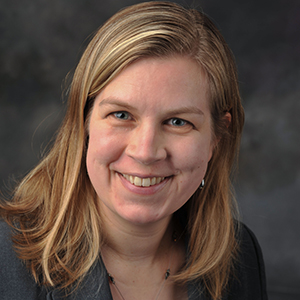
Edward Powaski is the mechanical practice group lead at SSE OE Group based in Toledo. He's responsible for establishing, implementing, maintaining, and improving multidisciplinary work processes.
Ed ensures quality and excellence at an enterprise level by leveraging the collective strength, diversity, and knowledge of the group, optimizing performance and increasing efficiency and quality. He has more than 35 years of experience. All right, so that's a mouthful. Ed, what are practice groups at ssoe?
[00:01:05] Speaker B: Well, practice groups really are a collection of staff from the same discipline. So we have mechanical practice groups, we have electrical practice groups, we have structural practice group, and so forth. But they're cross business units and operations. So, for example, in our mechanical practice group, we have about 160 staff, and they represent the mechanical departments from our commercial business unit, our automotive and manufacturing business unit, our food and commercial products business unit, we have an advanced technologies high tech group, and also our battery and solar division. So each of these groups, divisions, business units, have mechanical departments and have different focuses. But overall, we are all mechanical departments. So in our mpg, as we call it for short, we have engineers and designers who are from the H vac, piping, plumbing, and fire protection fields from within the mechanical discipline.
[00:01:59] Speaker A: Okay, okay. So why did SSOE create these practice groups? And in particular, as you say, mpg, not miles per gallon, mechanical practice group.
[00:02:11] Speaker B: Right. So why did we do this? Well, we wanted to be able to represent, you know, we have so many departments represented across these business units, and we needed to find a way to unify, align, and leverage the collective talent. Each of these departments has a lot of talent, but they folks focus a lot on their business unit. But there's times where if we could borrow that talent in other markets, it would really be helpful instead of maybe trying to go out and hire more. We have some already in house, but they're just in other departments. And we may not have been aware of this talent, you know, the diversity and strength within each of these departments that they have. And so we want to be able to use that across our practice group and really the entire enterprise.
So we wanted to create a culture of innovation, you know, with focus on leveraging employee experience, implementing technology Definitely improving knowledge transfer, developing talent. Really like to focus on continuous improvement and just define what is the SSOE way that we go about doing these things and, and just support these objectives, including our company strategic plan. So, you know, at the end of the day, what I'm basically saying is we want to realize that, you know, we are all stronger together than apart, and we're really more similar than different. And so this is an opportunity to leverage that.
[00:03:26] Speaker A: And you have a lot of experience. Ed, your department manager, why did you choose to move into this role as mechanical Practice group lead?
[00:03:37] Speaker B: So I like to use. There's a video I saw once on YouTube and if you type in YouTube, driving, changing a tire while driving a car, something along those lines, you'll see this like 5 minute video of these people driving a car up on two wheels, you know, sideways, and then two people on top of the car changing the tires. It's hard to believe, but they actually do it. But as I saw that video last year, I thought, you know, that reminds me a lot of my position right now as the department manager, because when I'm managing the mechanical department, you know, I'm trying to also apply continuous improvement in a variety of areas. We have code, platform establishment and ssua. We're trying to standardize equipment schedules and details, standardize our specifications, make improvements to our QA QC process, many other initiatives. And when you're trying to do that, but also trying to drive the car, as a DM department manager, I found that, you know, it could be challenging to do that well in, in addition to also the initiatives that I was trying to work on. So when this position opened up for mechanical Practice group lead at ssoe, I saw this as a perfect opportunity for me to pull the car over to the side of the road and properly start working on changing those tires. And so that, you know, that was probably the big motivation for taking on this role. And sure enough, that's what I've been able to do. You know, one of the things we've found is, you know, with the, we have a hybrid model, so we're not 100% remote, although we do have some staff. If they're not near an Office, then they're 100% remote. But if you're close enough to an office, we asked you to come in, you know, a couple days a week. It's a little different, usually two to three days a week for each department. And, and so we call it hybrid. And the thing that we're missing. And I grew up, like you said, I'VE been doing this for 35 years, 33 years at SSOE. And what I found in. When I was a young engineer, I'd often be sitting at my desk just doing CAD modeling, and I'd hear over the wall, a couple engineers talking about a conversation they just had with a contractor or a challenge they were having with a client and how they resolved it. So you're not even part of their conversation, but you're listening to their conversation and learning from it, even though it's not even the project you're working on necessarily, those type of interactions are harder to happen when people are in this hybrid model or working remotely.
So we've done things like I've been able to really dive in and create a weekly meeting where we have what we call like a knowledge transfer meeting. And we have our master engineers across these different departments available for other staff to just listen in as we talk about projects and challenges we've had and how we've overcome them, or what's the latest changes to codes we've seen.
It kind of simulates what I'm describing, that we don't get to experience as much in this hybrid world that we're in. So those types of initiatives, those types of changes to the way we do our work to try to better how we're doing things and better knowledge transfer, I can do in this mechanical practice group lead role. So, you know, that's. That's an. That's one example of many things. But at the end of the day, like I said, I've been here for 33 years, so that was the other reason I decided to go ahead and move from department manager to this role. I have a lot of relationships across this company. And as a result, it really is an advantage for me to be able to work with other leaders across the company and be successful, because I'm already in these relationships that I've built all these years so that we can implement these initiatives and improvements.
[00:07:10] Speaker A: Right. And those team meetings sound great because even if you're not an active member of a team or of a design group, you at least know who to go ask a question of or who to tap on the shoulder for more info.
[00:07:24] Speaker B: Exactly. It introduces you to some of the experts in our company that you would not have been necessarily aware of. And what's really great, when you have these master engineers, very senior engineers, they love to teach, they love to mentor and. And they kind of miss that opportunity, too, that they don't get to do. That particular master engineer I've worked with A lot through the years. He's mentored me. He's one of those guys that was so excited to take you in the conference room. Close the door. And you had a marker board. And he just start drawing, you know, hydraulic systems and pumps and. Right. Pressures all over the board. And you could just see he was so excited. So someone like that you just want to tap into for your junior staff to be able to learn from. And so this. Yeah, that meeting gives us an opportunity to do that.
[00:08:09] Speaker A: Exactly, exactly.
Looking at other companies, how can other firms benefit from your practice group approach? How can they take that to their organization?
[00:08:21] Speaker B: So that's a great question. And really, for those listening, if your company is finding that it's a challenge to have consistency across the same disciplines when you're working on projects from different business sectors, and I know a lot of companies are in that situation, that would really recommend that you consider applying the practice group concept. It's really a great way to unify your different disciplines. And again, just to be familiar with who your experts are and who are the people you can go to for, you know, enhancing the learning and the knowledge transfer across your company.
It's been. It's only. I've only been doing this about a year. We have a structural engineer who kicked it off a year before me. And so the structural practice group's been going, you know, a couple years, and then all the other disciplines we just staffed up in the past year. So we're just now sort of ramping up, but already seeing just that unity going is definitely enhanced across the company already in just this year time that I've been involved with the mechanical side.
[00:09:23] Speaker A: You have created some beautiful pictures of how this all works. Guys standing on the side of a car, changing the tire.
You've got quite a creative edge to yourself. You're a musician, right? What are you doing with that? What is Lunchtime Live that I've heard about?
[00:09:41] Speaker B: Well, I am a musician. I like to joke that as an engineer, I get to use both sides of my brain, being on the creative side, too.
So Lunchtime Live is a title we came up with for a Facebook Live sessions that we started doing. So I guess I should back up a little bit. So we have. I have a neighbor who is a percussionist, and what we started doing during the lockdown in 2020 is, you know, we were all home. We were working from home, and he and I would meet. You know, we were all keeping our distance, so we'd meet out on his front porch and just kind of play A couple songs during lunch just to get. Get outside. And. And. And it was still kind of cold. It was early in the pandemic, but word started getting out to our friends that we were doing this, and they said, hey, why don't you set up a camera or even your iPhone and just record it on Facebook so we can enjoy? Because we're kind of dying.
Missing human interaction during the pandemic.
So we started recording it, and then as the weather warmed, we started playing out on the grass. We'd have some neighbors would start to gather and listen to our songs, and then we had more musician friends starting to join us, so we had to start doing a rotation for. Because we had different people playing and singing. Lots of friends wanted to be a part of this experience.
And the really fun thing is even our CEO at ssoe, he was starting to lead remote town halls during the pandemic, and he would play clips of our lunchtime live videos at the beginning of his meetings just as people were gathering. So it's just kind of, you know, an opportunity to connect people during a time where we were all feeling very disconnected.
And really, here we are in 2025, and we're still getting together every month or so and making recordings if it's warm enough in the yard. If it's not, we might be in our sun room. But in fact, I think, yeah, I was texting yesterday, a couple of the guys trying to plan a few songs again. So it's been a fun way, though, to keep connected with friends, you know, share my love for music and fellowship.
[00:11:38] Speaker A: That is excellent. I love it. Thank you, Ed.
[00:11:43] Speaker B: You bet.
[00:11:45] Speaker A: All right, well, wrapping up, that was Edward Pawaski from SSOE Group. And for more information on mechanical engineering, the business aspects of engineering, and other H Vac topics, visit consulting specifying engineer, csemag.com and don't forget to check in regularly for new podcast episodes.
Thank you so much for joining us, and we'll be back again soon. Bye. Bye.