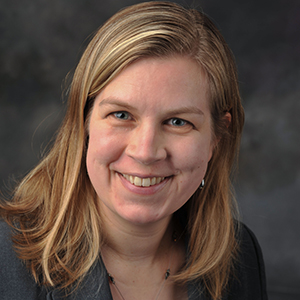
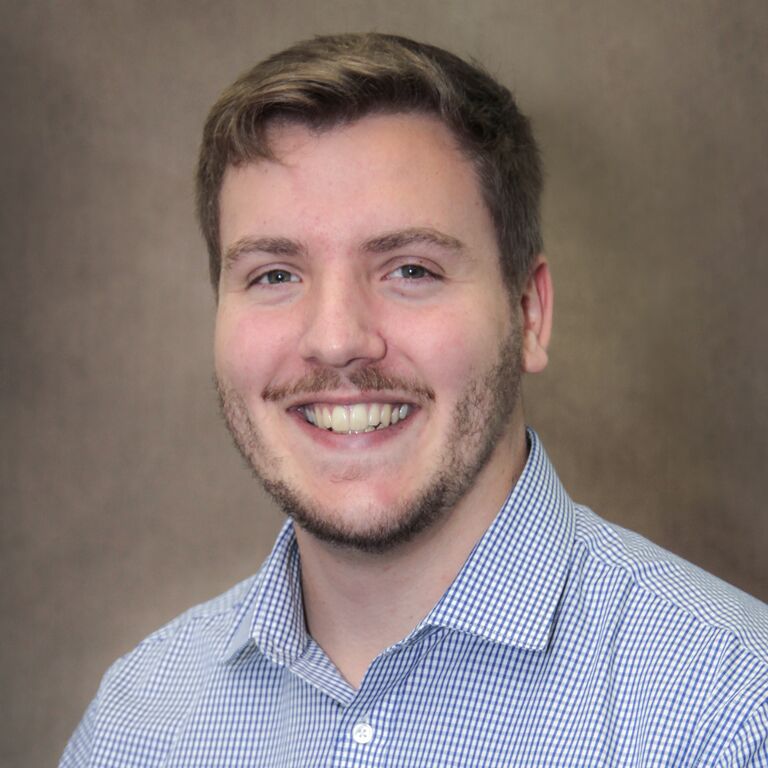
[00:00:03] Speaker A: Hello and welcome to the Consulting Specifying Engineer podcast. I'm your host, Amara Rozgus and today we're talking to Chris Finnan at Eaton about workforce development.
Thanks so much for joining me today, Chris.
[00:00:19] Speaker B: Pleasure to be with you, Amara.
[00:00:21] Speaker A: Yeah, it's great to chat with you again.
And before we get started, let me tell you a little about today's expert guest.
As national Application Engineer Manager, Chris Spinnin manages Eaton's team of field based application engineers across North America.
This group of more than 150 application engineering experts provides consultants and customers with technical engineering, specification and application support across Eaton's complete portfolio of power distribution and control products.
So talking about, I don't know, the workforce or what's going on in the hiring industry right now, Chris, what are some current trends you're seeing with consulting firms related to that talent pipeline or talent development or even retention?
[00:01:15] Speaker B: Yeah, I tell you, it's a great question and it is a big challenge and I think a common challenge that I hear from all the consulting firms and the principals that I deal with regularly, jokingly. I'll get a call once a week. You know, hey, we're looking for a new electrical department head or project lead. You know, I'm looking for somebody in the 10 to 15 years of electrical experience and I just. Those people don't exist. I know for whatever reason, you know, there's a real challenge to find experienced electrical power systems engineers that have that kind of experience.
You know, you could always go and try to pluck one from a competitor. Right. And, and throw money at the problem, so to speak. And, but it's, there's definitely a labor shortage where it comes to that and especially in our power distribution industry. And I think as we electrify more and more, that's going to exacerbate the problem.
So if there are any budding engineers, this is. Electrical power distribution is a great field to go in. It's got a very, very strong outlook because I do think there is going to be a huge demand for this moving forward.
And if you listen to economic experts, you know, the demographics in North America are growing, they're good. Our population is growing, but so is our economy. And our population growth is not keeping up with our economic growth. So it's going to create more of that kind of demand and labor shortage moving forward. And there's just not a population base to tap to solve some of these problems.
So you really got to look at attracting new talent. And Eaton has recognized this. We have these exact same challenges in our company. As consulting engineers do.
And we're having to take a much longer view to attracting new talent and look to recruit from university and then even recruiting, you know, early in the in the university career with co op programs and intern programs to try to attract talent that we can then acquire once they graduate.
[00:03:36] Speaker A: Yeah, and I think you just said, or just mentioned a huge topic that's really a problem or a challenge with a lot of universities.
How are these universities doing and prepping students for a career in power engineering? I mean, are they doing what they need to? Is there room for improvement?
[00:03:55] Speaker B: Yeah, I would say there's lots of opportunity for improvement there.
More emphasis on power and power distribution and control. Power control as our power grid is going to become more complex as we're adding new distributed energy assets. Solar, wind, fuel cells. The traditional paradigm of a single utility feeding power. One way to an entity is changing now.
So that complexity is increasing and then I'm hoping that then filters itself into the university and the academic side to put more emphasis on power, which I feel like has been lacking in the past. And I'll pick on my own university, my alma mater, Vanderbilt University.
During my four year career, I never set foot in the powerhouse or saw anything to do with the power distribution system around that university.
They have an extremely robust, complex and resilient power system there. They generate their own power, they feed over to a medical center that has tremendous amount of backup power and paralleling generator systems and those kind of things. Really excellent things to train your student base on. And I didn't get access and a view into that until I was in my career with Eaton and going back and it's like it seemed like a real missed opportunity. And I would say that's the case in most universities. They've got a very complex power distribution system that could really be weaved into the academics and the coursework in a very positive way to arm students with lots and lots of good experience that's going to translate once they graduate into a career in power distribution system.
We are seeing some traction with some university we've aligned with some to help them prepare power research labs again as the distribution systems are bringing on more sustainable sources and distributed energy assets and micro grids, all those things, you know, the complexity of the power system is becoming much more complex.
You know, there's much more stability issues that need to be analyzed and those things. So it's really good to see the universities investing in those kind of research labs and I think that's going to help train the next generation of engineers.
And so they'll be better prepared as they come out into the working world.
[00:06:32] Speaker A: I agree. A lot more practical knowledge is needed at the university level. And then that, that real experience. Wouldn't it be great if we could start it at the university level?
[00:06:45] Speaker B: Yeah, that's a real challenge. And honestly we've recognized that that's a need in our industry.
And so we've developed a lot of curriculum as Eaton to help take that theoretical world that students come out with a very good base understanding of and connect that to the real world and the real world applications.
In many of our classes, like we have a consultant focused class for early career consultants we call power up. And one aspect of that training is simply tying the symbol on the one line to the actual physical device and what that looks like and where that lives and, and then why it's put there and what its function is. And some of that stuff that's just that rudimentary we're finding is really, really beneficial to help kickstart a consultant in their new career.
[00:07:37] Speaker A: Okay, so let's take that a step further. You're doing some onboarding and some mentoring. What other development tools or programs used by Eaton could also be appropriate for consulting engineers or their firms to help with their new talent?
[00:07:54] Speaker B: Yeah, I would say many of the same challenges we're facing as Eaton, with new people in my team, as application engineers and everything in our product lines and our product development folks, I think have application in the consulting world.
So we're putting much more emphasis on mentoring and onboarding and really coming up with structured processes depending on what particular job classification someone's going into, to have one, a target mentor to help guide their development, you know, and really help shape their development and get them from, you know, brand new to productive engineer in the shortest time possible.
But then having an onboard template. So we use onboarding templates. We use a simple tool from Microsoft called Planner, which is nothing more than a big checklist. But it really helps us structure the development and tailor it to what the background is of the given individual.
Some of it is just basic blocking and tackling of a new employee to make sure they have a laptop and they've got all the credentials they need and an email account and an Amex credit card and all those kind of things that, believe it or not, are really easy to fall in the cracks and will limit how productive they are on day one when they step into your building.
So knowing that you've got all that, that stuff organized is actually a very valuable step. But Then we quickly can get into the development of, you know, what expertise that they need or what product development or application development they need, depending on what their role is going to be.
So we organize that in very structured onboarding templates with the whole curriculum of training that we have. We have an internal training called Eaton University that we use with all those building blocks that can be applied again according to what their specialty is going to be and what their focus is going to be. And then we also have external facing versions of those that we've developed to support our customers and our consultants that are a combination of on demand trainings that we have through our consultant portal, eaton.com consultant virtual instructor led training so people can get actual live instruction but without leaving their office or leaving their home. And then actual in person experiential training, which we call our EXL series, our experiential learning series, which is taught at our power experience centers or one of our manufacturing plants or at our enterprise data center. They really offer a hands on experience which we find is the most effective kind of education, again, part of which is driving that theoretical world to the real world and practical applications and being able to simulate every kind of power quality power event that you might see in the real world and to really get a rich understanding of how things operate in all those different scenarios.
So we, we've had a very good success with that. We get very positive feedback and we've continued to build out a curriculum around that kind of experiential learning.
[00:11:11] Speaker A: So there are really a lot of options to get your hands dirty, so to speak.
[00:11:17] Speaker B: Absolutely, yeah. And we're trying to structure the curriculum so it's not just we started it with the early career engineer.
So kind of those basics, those power system basics, again, some just simple component identification and understanding, but then basic calculations that we take for granted as seasoned electrical engineers that again, you know, you could do probably in your head or those rules of thumb so that you can quickly, you know, check off things or use that as a sniff test to know does this make sense? Am I getting the right thing out of my tool or am I interpreting this correctly? Those building blocks of basics like overcurrent, protection, coordination, arc flash, you know, to build that foundation. But then we're working on also having content in the more advanced and intermediate and advanced for really engineers at any point in their career. So our industry is obviously a lifelong learning industry.
And there's, it's always ongoing technologies and codes and standards developments and new applications.
And so we want to make sure We've got curriculum to help people at any stage of their career.
So our intermediate classes deal in codes and standards introductions and different assemblies types and power distribution types and then get into more of the digital and the communications and networking side of things. And then our advanced tier gets into really deep dive applications around like energy transition and applying micro grids.
Specific segments like healthcare data center. Mission critical that we actually have the luxury of teaching out of our own enterprise data center that's running eaton and eaton.com and all of our networking. But we can actually teach a class there and you talk about a true immersive and understanding the actual practical application. You can see it and walk around it and actually interact with the power distribution system in a working enterprise data center.
That kind of education. Again, we've gotten really good feedback and we continue to grow in those curriculums across really all the segments that Eaton plays in, including utility. We have a really good intensive three day utility introduction class that goes through all those basics for anyone that's going into the utility generation and distribution kind of market.
[00:13:48] Speaker A: Yeah, that all makes perfect sense.
Thank you Chris.
Speaking of advanced level, I understand you're an advanced level musician and you've been on stage playing with a lot of really talented musicians.
Any good stories or gossip?
[00:14:07] Speaker B: Well, you know, being born and raised and living here in Nashville, right. Everybody has got, you know, it's Music city. Everybody's got a little connection with the music industry.
I, I play a little music myself. I have a percussion background primarily in the rudimental percussion side. But we've had the good fortune to get tied in a group that I started once I kind of aged out of the activity. I started a group for, for youth in, in rudimental percussion. And we've gotten tied in with the country music industry so had the good fortune to perform with several big acts like Keith Urban, Sugarland, Little Big Town, Ariana Grande, play at really big events like CMA Fest in front of 65000 people and at Nissan Stadium or on TV for the CMA Awards for, for millions.
I play in an 80s cover band and I've had the opportunity to play with the likes of Jonathan Cain from, from Journey or Tiffany, the Tiffany from the 80s. Des Dickerson who was Prince's lead guitarist, good friend and just fantastic musician. So I love it. It's. It's such a great diversion from the electrical engineering of my day job and enjoy it. I think it massages different muscles in your brain to get into playing music and enjoying music and so definitely a big hobby for me.
[00:15:37] Speaker A: Yeah. What a variety of musicians. How cool.
[00:15:42] Speaker B: So, yeah, it's, it's funny. Definitely Nashville is known for country music, but boy, there is a lot more going here in, in all genres and there's just top notch musicians in this town in every arena. And again, it's, it's a big passion of mine.
Believe it or not, growing up here in Nashville, I'm not a big country van. I would not call myself a big country fan. But like I said, there's lots and lots of other types of music and, and just really the best musicians I think on the planet have some kind of connection to Nashville. And so it's, it's a big part of my life and something I really enjoy to do outside of engineering.
[00:16:23] Speaker A: Excellent. Well, thank you so much for your time today, Chris.
[00:16:27] Speaker B: Pleasure to be with you. Enjoyed it.
[00:16:31] Speaker A: Wrapping up, I just spoke with Chris Finnan from Eaton. For more information on workforce development, salaries, training and up and coming young engineers like the 40 under 40 winners, visit consulting specifying
[email protected] and don't forget to check in regularly for new episodes. Thanks for listening and catch you next time. Bye Bye.