[00:00:00] Speaker A: Foreign.
[00:00:03] Speaker B: Hello, and welcome to the Consulting Specifying Engineer podcast.
I'm your host, Amara Rozgas, and today we're talking about lighting with Paul Daniel and Ann Ulstad from hdr. Thanks for joining me today. Anne and Paul, how are you doing?
[00:00:22] Speaker C: Great, Great. Great.
[00:00:23] Speaker B: Yeah.
[00:00:23] Speaker A: Thanks so much for having us.
[00:00:25] Speaker C: Yeah, thanks, Amara.
[00:00:27] Speaker B: Good, good. Well, let me share a bit of background about today's guests.
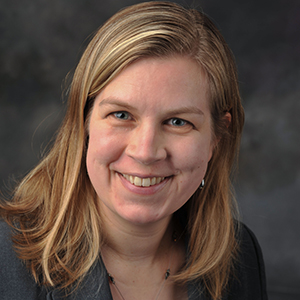
Ann Ulstad is a senior lighting designer at hdr, where she specializes in healthcare and science technology applications.
She puts an emphasis on sustainable design and daylighting techniques to produce innovative and efficient solutions.
Paul Daniel is the lighting Design section manager at hdr. By employing innovative ideas, care for detail, and an integrated approach, Paul can achieve a design that is sustainable, functional, and aesthetically appealing.
So lots to talk about here with lighting.
Let's kind of start at the top. What are some key considerations when integrating lighting with architectural design? And we're talking about creating impactful or creative spaces.
[00:01:22] Speaker A: Yeah. So I think it's always important to remember that design's a collaborative effort.
We should be working with architects and interior designers to make sure that the lighting meshes with the overall concept of the building design.
But we also need to think about practical things, such as how the occupants are going to be using the space, what kind of tasks are going to be performed, and then also kind of mundane things like energy codes and maintenance requirements to make. Make sure that the building can be used for a long time.
[00:01:57] Speaker B: Yeah.
[00:01:57] Speaker C: And. And thanks, Anne. For. For this perspective, I. I might want to add that to me, when I started working on a. A lighting project, I really want to understand how the architects see that project and how they see how it's going to evolve and work and have an impact at the end. So the architectural idea and architectural concept, to me, is really important.
And the lighting really needs to transform the space into that and make it pop or make it work functionally.
And lighting really transforms a space, so we always have to work with contrast. It's not just about lighting. It's also about darkness.
And the balance of the darkness and the lightness in a space is really important.
And by getting that understanding and the architectural concept from the architects, we can work with them, collaborate with them to achieve that goal and to play with how we can transform a space into a nice, creative environment and impactful.
Right.
[00:03:16] Speaker B: So you're really looking at everything holistically.
Can you share some examples of innovative lighting design in different buildings or different environments?
[00:03:28] Speaker C: Yeah. So do you want to go in or do you want to go.
[00:03:30] Speaker A: No, you can Go first.
[00:03:31] Speaker B: Yeah.
[00:03:32] Speaker A: Okay.
[00:03:33] Speaker C: So, yeah, there's a couple projects I have in mind.
One is actually a park in Newark that we were working on where it's an old water tower. And that old water tower has a lot of businesses around it. But we wanted to create a park from it and make it more lively at night and even in the morning to host events and such. And lighting was obviously a big part of that. So understanding what that goal is, what that end goal of that park is, was really important to us to integrate the lighting design to it.
So what we did is that we took that old water tower, we made it more of the center of attention and made it into a feature that can be lit at night, that can be color changing. We can also project onto it messages for the community.
And then around we provided more of the ambient illumination in the space, but also some interesting pathway lighting that is integrated within a new little elevated park to elevate that portion of the project.
So to me, the lighting was really important in elevating that.
Another project that we worked on, which was very unique, was a children's hospital that has a behavioral health component to it. And it's a really small project.
It's actually an ED and emergency department where the kids can live in that space for a little bit, for maybe a week or so.
And it was really important for us to provide one, from the technical standpoint, a space that is functional for behavioral health environment, but also something that will make them more interested in that environment and because they're there for, you know, night and day and they're interacting with each other. So we wanted them to belong to that space.
So we introduced a lot of ideas that marries that functionality of the behavioral health to really cool ideas of innovative fixtures that are organic and providing more of a lit space. It's actually underground, so daylighting was scarce. So we had to be creative to provide daylight like environment in there.
And that was a lot of fun because we did not want to provide something that is a prison like fixture in those spaces. These are children, they. They want to feel more comfortable in the space.
So that was also a great project where we integrated a lot of color lighting, a lot of aspects of. Of daylighting integration or faux daylighting, I should say, and tunable white as well. So that, that was a great project.
[00:06:48] Speaker A: Yeah, I, that's. I mean, those are really great examples. I have a really similar example of.
We recently designed a cancer center and the post op rooms were located in the center of the building with no access to daylight. And that's such an important thing to see when you're coming out of anesthesia. Specifically, you need to, like, orient yourself to where you are, the time of day.
So we added in these fixtures that looked like windows, and they changed light, changed white light based on how the daylight would appear outside of the room. So it really looked like it. It's a light coming into the space, daylight coming into the space, which is really helpful for people to orient themselves.
And that same project had an infusion bay.
And even though it was a big open space, we made sure to give each patient individual control over the light space or the light fixtures in their own spaces so that they could have the ability to dim or look or raise the lights to their preference. And I think in that situation, having control over one aspect of the space can really make people feel more comfortable and calm.
[00:08:14] Speaker B: I think you both just alluded to this, but LEDs are everywhere. So how has that advancement of LEDs influenced lighting fixtures?
I don't think we always think about healthcare, hospitals, research.
How have LED technology influenced those lighting fixtures?
[00:08:35] Speaker A: Yeah, I mean, it's been about 12 years since LEDs really became widely available on the market. And it's really incredible to see how much the industry has changed since then.
At the beginning, you had manufacturers retrofitting LEDs into CFL downlights and fluorescent troffers and just plopping them in there. But now fixtures are really tiny. You can get everything you want from static white to color changing and tunable white and really high cri.
I'm currently working on a research facility where they do product testing and they need to have the ability to change the color temperature of the fixtures as well as have the color masking option, which basically uses a narrow spectrum red light to block out all other color on the product. And their current facility has multiple fixtures and control devices to do all of that. But in the new facility, we can do it all with one really low profile fixture and one scene control panel.
[00:09:46] Speaker C: Yeah, and I'm gonna continue on that. I think the, the aspect of LED lighting, on how small it is, give us the opportunity to really integrate it into things and aspects that we never had the opportunity with fluorescent before.
Now fixtures are really, really small and tiny, but they give a lot of light and, and we can really integrate them into small spaces and to give impact.
And especially for healthcare environments, right now it's more geared towards hospitality more than a healthcare environment, but it still needs to meet all the requirements in terms of cleanability and flexibility and maintenance that we all have to deal with, but also give a space to be more of hospitality. Feel like you're going to your own room, you're going to your own house, where you feel like, this is my room and I'm going to be staying here for a little while.
So having the flexibility and advantage of smaller fixtures to be integrated within architectural elements is really key for us.
And it made it really easy to advance our design for these spaces.
And obviously, the other advantages, like Ann alluded to, are the changing in color and tunable weights and obviously circadian rhythm that helps patients heal.
These are things that are becoming more and more of the norm today and into our facilities.
And it's becoming something that the clients are asking for more. And having that flexibility again to integrate with LED lighting give us great advantage to work on these projects. From the hospitality kind of mindset.
[00:11:47] Speaker B: I'm glad you brought that up, Paul. I know there's been a ton of research on circadian rhythm.
So what are some of the challenges or the benefits of integrating that circadian supportive lighting in a workplace? What does that change?
[00:12:05] Speaker C: Yeah, so I think circadian supportive lighting is really important, not just for healthcare. It's really important for everybody. We live in these environments that are indoor with sometimes minimal daylighting exposure, or we work late. And I think with the current environment, for anything that we have today, tunable light is becoming really important to integrate. So that's really a benefit to it. It comes with challenges to integrate that kind of system into the lighting. Obviously, cost is one of them, even though cost has been decreasing lately. So we could use tunable weight into our projects, but it's still something that is of concern not just on the lighting side, but also on the control side.
The other element that is really tricky when you specify a tunable weight system is that you have more control and you have a lot more zoning that you had to deal that they have to deal with. So commissioning and programming is.
Is very intricate.
We just finished the children's hospital that we just talked about earlier and took us about a good two months to go through that one floor to do all the tunable white features and zoning and the color lighting that we had to integrate in there. So all of that took a long time for the commissioning agent and also the programmer to go through and get it right, because there's a lot of zones out there that they need to understand.
And the systems are becoming a lot more intricate and sophisticated. So even though it's a good thing, but also gives us a lot of challenges during the CA Period.
[00:14:10] Speaker A: Yeah, I definitely agree with what Paul is saying. And for workplaces specifically, another challenge can be just convincing the client client that they might need it. Because a lot of times there are windows in workplaces, so people see that there's daylight available and they don't see the need for any additional supportive lighting. But that's not always the case. And we actually did a project recently where there were three levels of office space. Two were above ground and one was below ground with no daylight available.
So we actually installed the same windows that they had on the second two floors in the basement and put some tunable white lighting behind that. And it was so effective that when we were doing a walkthrough, someone wasn't getting service on their cell phone, so they walked closer to a window so they could try and make a call, which kind of proves that that was a pretty effective solution.
[00:15:17] Speaker B: Yeah, that's a great example.
And you actually, you just both touched on this. Again, cost money.
How can designers balance that cost control with innovation and lighting? And what are the methodologies or what are the project delivery systems that can support that balance between the cost and the required lighting design?
[00:15:42] Speaker A: I think it's really a matter of understanding what's important to the project and what's important to the client.
Sometimes it's a matter of prioritizing certain parts of a project, like if there's a statement piece in the main lobby or if you want to use circadian supportive lighting in a patient area, then maybe you can balance that with using some other fixtures in back of house or maybe making it simpler in other places.
It's also a lot of awareness of what products and solutions are on the market and what's available.
Sometimes you can do simpler control solutions to save a little bit of money.
And yeah, it really is just being aware of what's out there, I think, and prioritizing.
[00:16:36] Speaker C: Yeah. I want to add that today's technology really allows us to do what we call a life budget control. So especially on projects like an integrated project delivery, what we call an IPD project, where everybody's involved, including the contractors and the client and the engineers and the designers, we can use Revit, for instance, or some of these tools to track our budgets as we go, as we design. So if we add fixtures, we subtract fixtures, it makes it easier for us to see where we are today.
So what we typically do is that we involve our reps from day one, so they know what the project is, we know what our options are, they give us those options. We can do a competitive bid at the end. But as we're doing the project, as we're actually designing the project, we can put in that information of cost into the model and see where we are live.
So there are no surprises when we get to the end and we can actually see are we over budget, should we decrease a little bit from this side or what is it that we can do in order for us to control that budget? So at the end we have a successful project. And having the contractors on board from, from the beginning helps a lot because, you know, they also understand what we're trying to do so we can do more of a target value design. So it's not just about slashing a cost. It's really about what is the best thing for the project and what are the priorities.
So they cannot just come at the end of the project and say, well, we're going to slash tunable white out from project, because if that was a project goal, that needs to be maintained throughout.
So these tools really help us to do so. And the other thing that some of the technologies give us, we've been using what we call super families, which is basically a family of lighting families. So let's say that we have a patient room or an office or so we can put in that one office as a super family and then duplicate that everywhere. But then if we have one little change, let's say that we have, we add, I don't know, a downlight in one instance in one of these offices or rooms.
It updates to all of, to all these rooms. So again, we can go to our live budget and see where we are with the overall budget and how that little change made a difference. So we can control that and really be fair with the client and be fair with everybody of these changes and give them an accurate estimate of where we are.
[00:19:38] Speaker B: And that all makes perfect sense. Thank you. Thank you.
So we were joking about this before we started this recording.
Travel.
We all travel a little bit differently. But where has travel intersected with your passion for lighting design? Like I walk into a building, I look up. What do you two do?
[00:20:03] Speaker C: We're lighting geeks, so we definitely look at ceilings all the time.
So I, I love traveling as, as well as Ann. We have this passion. We, we share that passion for, for traveling and we go to a lot of interesting places. A couple places that I've been to that are really interesting was the Sagrada Familia in Barcelona. And not just from the lighting, that is electrical lighting in the space, but really how the lighting interacts with the building.
It's quite spectacular and spiritual at the same time. You see all these colored windows at the top of the building, and as you go in, you get immersed immediately into this different world of lighting and contrast and. And shadows. And it definitely makes you think on the importance of lighting and how it affects us as human beings. So that was one. One place that was really amazing to me. Another place. I'm from Egypt, so I've been to Abu Symbol.
And the ancient Egyptians really had value for the sun and the daylighting as well. So a lot of their temples, especially Abu Simbel, has the lighting that shines on the face of the king, you know, twice a year. And I was lucky to go during one of those events.
And just seeing how the control of the lighting is.
Is exact to the point that it illuminates the face of the king at that instance is quite amazing and. And also very spiritual. And I thought that was an amazing experience for lighting. So that was my part.
[00:21:55] Speaker A: Yeah, I definitely want to do that sometime. That sounds really cool.
So I actually have in the past scheduled vacations around lighting events. So a few years ago, I went to Amsterdam during their lighting annual Light Festival.
Every year, different artists put up light sculptures in Amsterdam from. I think it's the end of November until January.
And there's about 20 installations throughout the city. And it's just really spectacular. And there's always a theme associated with it. So it's really cool to walk around the city and see all of these cool sculptural lighting elements.
During that same trip, we also went to Belgium, in Brussels, and at the Grand Place, during December, they have a light and sound show where they have music and lighting all around the plaza. And it is all coordinated and it's very cool and immersive. And I would recommend if anyone has the opportunity to go see it. My husband and I were there for several nights, and we went every night. They played it every hour throughout the night. And we went many times to just stand in the plaza and watch the show, and it was very cool.
[00:23:20] Speaker B: Well, I have to agree.
[00:23:22] Speaker C: Yeah, I was just gonna say the grand plots in general with lighting is spectacular also that, like the whole year.
[00:23:31] Speaker A: Yeah, the general lighting is really cool, but they had. It was all color changing and there was loud music. It was very fun.
[00:23:40] Speaker B: Yeah, you're definitely both lighting nerds. I agree.
[00:23:45] Speaker C: Yes, we are. We love it.
[00:23:49] Speaker B: Excellent. Well, thank you, Paul. Thank you, Anne. And this is where we do have to wrap things up.
Once again, I just spoke with Paul Daniel and Ann Uelstad from hdr. For more information on lighting and lighting design, visit Consulting specifying
[email protected].
and don't forget to check back here regularly for new episodes. Thanks for joining us and we'll be back again soon.
Bye Bye.