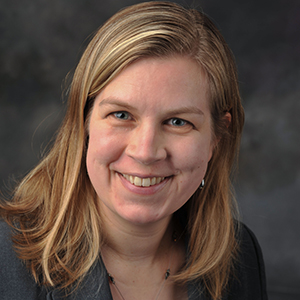
[00:00:00] Speaker A: Hello and welcome to the Consulting Specifying Engineer podcast. I'm your host, Amara Rosgas and I've connected today with Mario Perez from arup. We'll be talking about lab buildings in this conversation. Thanks for joining me today, Mario, how are you?
[00:00:17] Speaker B: Hi. I'm fine, thanks, Amara. Thanks a lot for having me here. I'm excited about this opportunity to talk about intelligent and sustainably focused design of life science research spaces. I'm looking forward to the conversation.
[00:00:29] Speaker A: Yeah, yeah, me too.
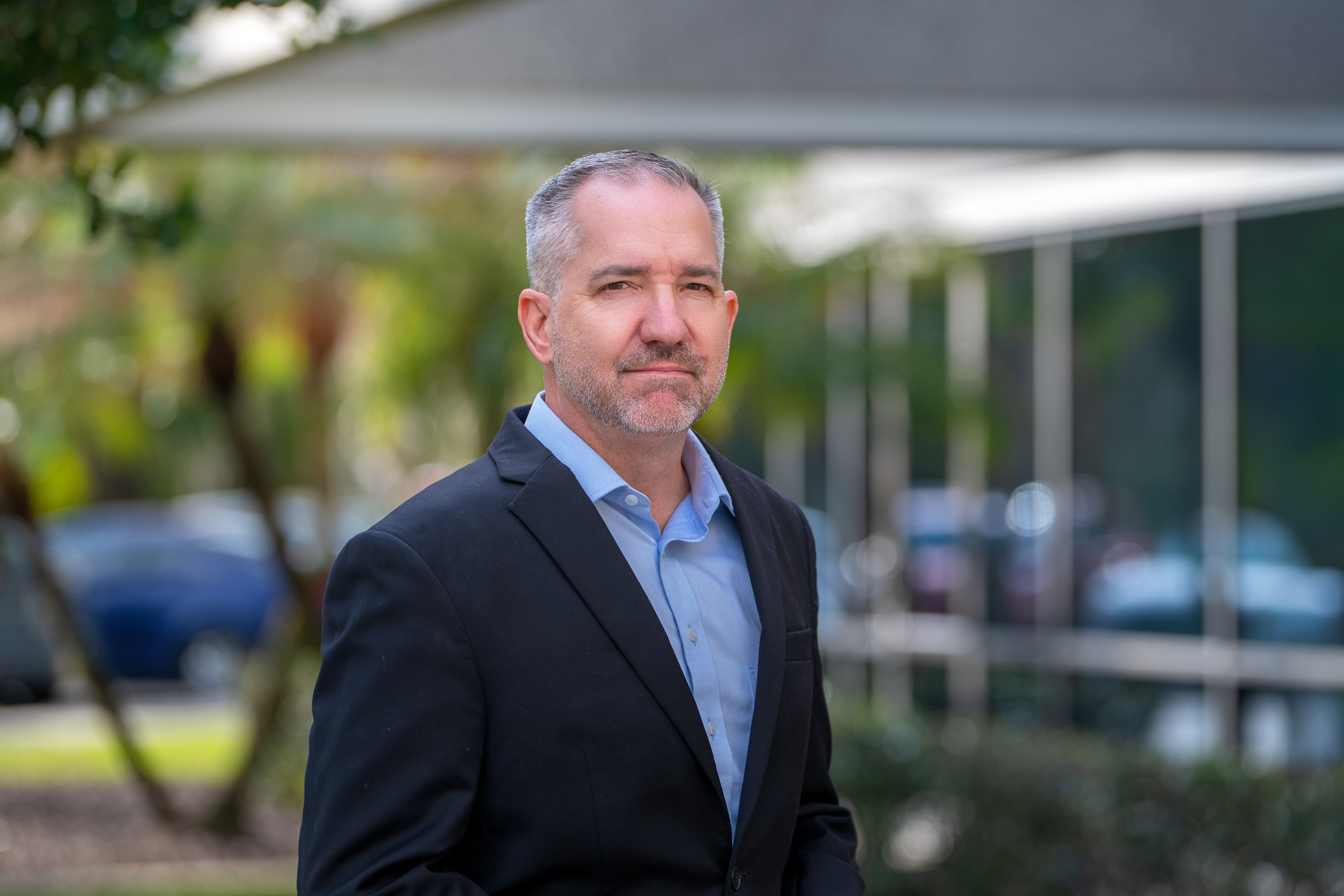
So, for some background, Mario Perez leads arup's life sciences projects along the west coast, providing technical expertise, leadership and client relationship management.
He's an expert in electrical system design across a wide range of technically challenging projects, including a variety of laboratories and life science research facilities.
The topic of driving intelligent and sustainably focused designs for lab buildings is a big one. So let's start by talking about changes in this area. Mario, as we head into 2025, what are some emerging trends that we'll see in the life sciences space in relation to these lab buildings?
[00:01:13] Speaker B: Yeah, it's a really exciting time in life science and lab building design and I think there's a lot of changes coming. I think there's a big push in the industry to make these complex buildings more energy effic and also a big push on decarbonization, not just on embodied carbon, but also addressing the operational carbon through electrification.
And even though a lot of these cases or a lot of these initiatives are being pushed from legislation or local municipal reach codes or even natural gas bands, other life science clients and developers, they're voluntarily making this change, realizing that the future is really leading to an all electric life science building with few exceptional cases that can't be easily, easily accomplish with the current technology.
[00:02:01] Speaker A: Okay, so looking into the future using your crystal ball, what will labs look like in the future?
[00:02:08] Speaker B: Yeah, sometimes when I think of labs in the future, I remember that one scene in the Avengers where Tony Stark is trying to create a device for time travel and he's working with a virtual AI with a virtual heads up display that he's manipulating with his hands and the movement of his fingers.
But I think that's a very limited view of what's going to be done in the future with emerging technology and science.
I think science itself will continue to be specialized or focused in life science lab buildings, but there really will be an evolution of what this lab science or space needs to be.
Because gone are the days where lab research space has to be a cold, white, overlit, sterile environment.
I think in the Future labs will continue to be more human centric spaces that allow for researchers to be more comfortable in the space and interact more with each other.
Because we all as humans work better when we're in a comfortable environment.
I think tomorrow's labs will also take advantage of emerging technology like robotics automation that will take care of repetitive and time consuming tasks and processes. I think there's a really big push in the industry for digitization.
And we're also seeing a lot of research facilities beginning to look at how they can integrate artificial intelligence intelligence into their process, both to accelerate the way they analyze and share data. And this is going to allow them to bring more products, treatments and cures to the market quicker and safer.
[00:03:39] Speaker A: Okay, so do you think that labs will scale down instead of up? And why?
[00:03:45] Speaker B: Yeah, I think there is a function of making labs more efficient is really to push on miniaturization.
Right. Because as the tools that are used in science become more precise, and with the use of those tools like automation, robotics and AI, researchers are really using smaller samples, smaller batches. And I think ultimately this is going to lead to a smaller and more efficient lab space.
This also reduces the amount of waste generated by these facilities, which everyone recognizes is a growing problem.
I'm also excited to see how the growing trend of general unassigned lab spaces and lab equipment is, is becoming more prevalent in the industry, as well as digitization of supplies and chemical inventories that are allowing labs to be used more efficiently and therefore you can do more productive work in a smaller space.
This is also allowing researchers to be closer to each other and closer to their work, which also improves efficiency.
And if you can make better use of the lab space within a building, this opens up the possibility to create more collaborative spaces both inside and outside of the labs. And these places allow researchers to interact and spark additional innovation and ultimately leads to better scientific results.
[00:05:08] Speaker A: Cool. So that gives me like a whole range of questions to ask, but let me focus a little bit here.
How will and how have these trends that you're seeing drive further innovation for the end user, the scientist, the researcher, whoever's working in that laboratory, and for sustainable development consultants like you at arup.
[00:05:30] Speaker B: Yeah, I think that's a great question. I think there's always been a natural evolution to more energy efficient lab design.
I remember about 20 years ago when I started designing labs.
With my background in electrical engineering, I remember I started doing a lot of lighting calculations for laboratories. And back when I started, all laboratories needed to be a minimum of 75 foot candles and with some specialized tasks and researchers wanting up to 100 foot candles.
This level of lighting seems outrageous today because we're designing labs today with, with half or even less of that light output. But we're actually creating better quality of light within labs because we have better uniform and so the results are better and the spaces aren't over lit and we're not wasting a lot of extra energy.
But in order to change this trend, we really had to get acceptance from the researchers, the scientists and the lab users, not to simply continue with the past design standards, but to provide something different or unique. And as life science end users begin to adopt new technology, new workflows, and they change or allow deviations from the status quo, that allows engineers such as ARUP to push the envelope of sustainable design and life science spaces, and that also allows other researchers and clients to do the same.
[00:06:58] Speaker A: Right, That's a great lighting example.
Can you talk about any other innovations or technologies that are making the lab building more sustainable?
[00:07:08] Speaker B: Yeah, I think there has been a lot of change in the technology and the equipment.
Specifically from an MEP perspective. I know heat pump technology has evolved very well over the last few years. Cooling towers are more water efficient these days.
Of course, there's also a prevalence of LED lighting and enhanced lighting controls.
Emergency generators have better emissions equipment, demand metering of electrical usage is much cheaper and it's better integrated. And the dashboards really help clients understand where they're using their energy.
This equipment and technology, along with the new tools used within the labs that I mentioned previously, like robotics, automation and AI, open up the ability to reduce our carbon footprint of lab buildings, reducing the demand on resources such as power, water, and they reduce waste.
[00:08:00] Speaker A: It sounds, Mario, like you've been designing lab buildings for a while.
Tell me you have some free time.
[00:08:09] Speaker B: Yeah, when I'm not trying to save the world one lab at a time, you'll normally find me in my outdoor kitchen with my grill smoker, either making a brisket, a pulled pork ribs, carne asada, anything that's meat, or trying out a new recipe that I found on YouTube.
[00:08:26] Speaker A: Anything amazing that you've made recently?
[00:08:29] Speaker B: I consider myself a pulled pork expert these days because I think I really enjoy, after 8 to 12 hours of smoking it, being able to pull the meat off the bone. I gives a lot of satisfaction. So I, I, I could consider myself an expert in that now.
[00:08:45] Speaker A: Nice. So multitalented. Got it.
Awesome. Well, thank you, Mario. It was a pleasure to chat with you today.
[00:08:54] Speaker B: It was great talking to you as well.
[00:08:57] Speaker A: And that was Mario Perez from ARUP talking about the changes in lab buildings that we're all going to see.
For more information on high tech facilities, lab buildings, and the related codes and standards, visit Consulting specifying
[email protected]. thanks for listening and catch you next.