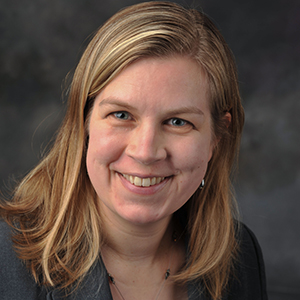
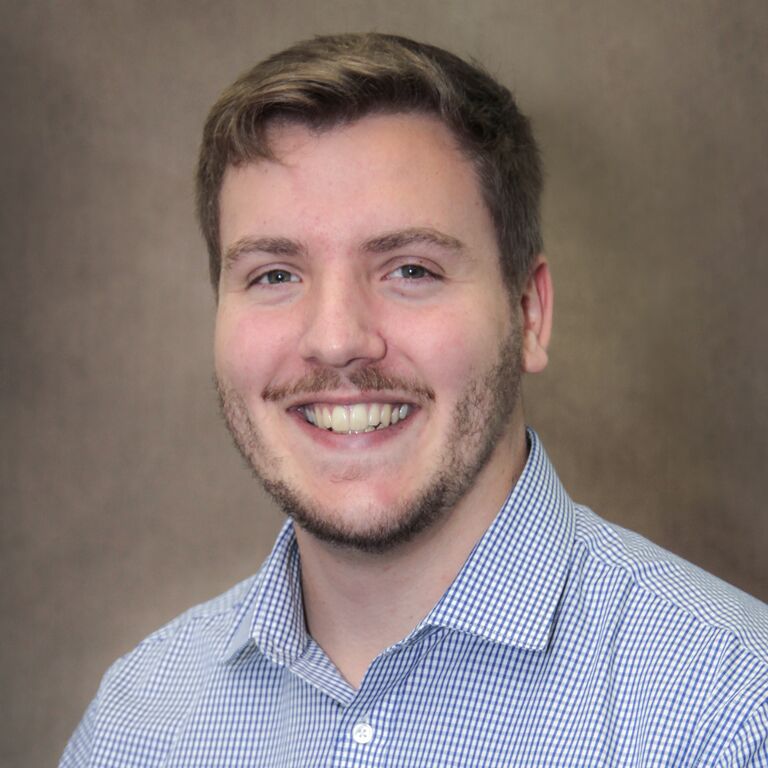
[00:00:03] Speaker A: Hello and welcome to the Consulting Specifying Engineer podcast. I'm your host, Amara Rozgus, and I've connected with Analio Enriquez of Jordan and Scala Engineers.
Today we will be talking about assisted living facilities and the hot water systems within them. Thanks for joining me today, Annelio.
[00:00:24] Speaker B: Thank you for having us.
[00:00:26] Speaker A: Yeah, yeah, it's a pleasure to have you. And first, let me share your background with our audience before we get started here.
Analio Henriquez is a senior associate and team leader at Jordan and Scala Engineers.
He provides design solutions for a wide variety of building types and oversees a multidisciplinary team of MEP project managers, designers and technicians.
Enelio is passionate about delivering designs that support the construction industry's dynamic needs.
He loves the challenge of creating system configurations that can be executed quickly and will perform flawlessly.
So, Analia, when we think about facility management in an assisted living space, for example, safety is obviously a top priority.
So from your experience, what are some of the unique challenges that engineers face in these environments and, and especially when it comes to water systems?
[00:01:26] Speaker B: Well, there are still challenges and considerations we must take when designing these systems, but we are lucky that we're having this conversation in 2024.
About 100 years ago, this conversation would have gone completely different if you wanted to have, you know, indoor plumbing was just getting off the ground. In fact, 1920s, I think the White House got their first floor plumbed.
So we've come a long way and, you know, today when we think of technology, we mostly think about electronics, but the technology and the plumbing systems has really come a long way.
But however, you know, we still have a lot of considerations that we need to take into account when we're bringing water into these, these facilities and when we are disposing of this water, of course.
But we, you know, like I said, we're very lucky.
You still can see in some older European cities where they have a gutter running down the. The street where they used to dispose all their waste.
So definitely a lot of people consider that in terms of saving lives.
The plumbing industry has done more for the world than any other technology, perhaps in the last couple of centuries.
But like I said, we still have some challenges that we need to keep in mind when we take them for granted most of the time. But to have readily available, drinkable tap water, hot water in our properties is still quite a challenge. So we'll go through some of the technology that we use to achieve that.
[00:03:24] Speaker A: Yeah, it's definitely something we take for granted and kind of to switch Gears a little bit and focus on hot water. Why is it so important to control hot water, the temperature in an assisted living facility?
[00:03:38] Speaker B: Yeah, I mean, this is usually an older, more vulnerable population that lives in these facilities, although there are some younger people as well, but, you know, highly susceptible to getting burned if the water is too hot. And then there are other challenges as well.
Legionella, which can be deadly to older, you know, people and people with, with immune system deficiencies and so on, also can develop a certain temperature. So there's a sweet spot between, you know, making sure that somebody's not going to get burned with this hot water that you're delivering throughout the property and also storing the, the water at a temperature that will prevent this Legionella bacteria from growing.
And the sweet spot is somewhere between 110 degrees Fahrenheit and 140. So we want to store it at 140, we want to deliver at 110 so that people are not getting burned. And then there's some technology ways of achieving that we're going to discuss.
[00:04:55] Speaker A: So is this best practice, Is this a requirement or what are the codes and standards look like?
[00:05:00] Speaker B: Yeah, all building codes today require that we provide hot water for bathing, washing, culinary purposes, cleansing, laundry, etc.
So, you know, it is mandated that we have hot water in these, in these facilities.
There's also mandates by code as to how far what the code calls the source of hot water is from the, from the final fixture that you're using it at.
And the source is not necessarily just a hot water tank, although it can be, but you know, in large facilities like this, and these are typically usually very horizontally spread out facilities because they tend to be one or two stories at most, that we want to deliver on a loop throughout the facility and that becomes then your source of hot water. So the way we achieve that is, you know, we have a pump system in, usually in the mechanical room, and we're heating up the water, we're storing it at 140, like I said, and then we're, we're pumping it throughout the building at a, at a reduced temperature.
So the, the way we, you know, we can discuss how we, we maintain that temperature, but we do it with, you know, balancing valves, we do it with mixing valves to make sure that the temperature never gets out of the range where we want to keep it.
[00:06:41] Speaker A: Okay, so store at 140 degrees, deliver at 110 degrees. How do you ensure that the temperature is safe?
[00:06:49] Speaker B: Yeah, so we have a, we install a thermostatic Mixing valve. The code does not allow you to use the temperature setting on the water heater itself to control the temperature. It's a, you know, code requires that you have an additional means of controlling that temperature. So we use a mixing valve, thermostatic mixing valve. That can be mechanical mixing valves, there can be digital mixing valves and that will control the set point of the, of the distribution water. So we got 140 degree water in the storage tank. We pipe that to the mixing valve. The mixing valve score, of course takes cold water on one side, hot water on the other.
And the set point we usually use 110 degrees, which is the starting point of what the code requires for hot water.
And then there's an additional safety mechanism. Just downstream of that.
On the distribution pipe, we put an actual solenoid valve that is attached to what we call high temperature alarm and that is set at 115 degrees. So if that 110 degree distribution water ever gets to 115, an alarm goes off and that solenoid valve will shut down. To make sure that we are not sending anything above 115 to the fixtures that could potentially burn someone.
The other side of that is that we need to balance the whole system. Right. A lot of these facilities are built, they're sort of what I call a crab. You know, they have a central building where everything happens. You know, the kitchen and the activities. And obviously your hot water heaters are usually there. And then they, they have legs that, that build out from this, from this central plant. So it's very important that we control and we balance the water coming back from all these legs back to the, to the water heater room. And the way we do that is with called balancing valves. And there's, you know, a lot of you are familiar with it, but they could be very simple. You know, that you, they're prefixed, you know, one gpm, half a gpm, whatever you're trying to move through that pipe.
Or you know, more sophisticated ones that are thermally open and closed, they're adjustable ones. There's a whole range of them depending on what you need. But what, what we don't want to ever see and ever do is try to balance the system with a, with the ball valves, which is, you know, in the old days that they used to try to do that.
It's very difficult to do, I would say almost impossible on certain types of buildings. And you, you inevitably end up with some legs that are always unbalanced and you're not getting the flow and the temperature that you, that you designed for.
[00:10:05] Speaker A: So Analio, there are a lot of details that have gone into the design. It sounds like how do you ensure that the system has been installed as you designed it?
[00:10:16] Speaker B: Yes, we typically visit the site depends on the size of the project. Usually three times at least during the rough in, at the very beginning of the job before they put up all the walls and then we do a final walk through to, to ensure that everything's working as, as designed.
We, we are able, you know, if timed properly and sometimes, you know, the site's not ready so we can't get there, you know, exactly when we want to be there. But we, we went, you know, we just go through the plans and make sure that all the components are there, that the water heater room is properly piped. You know, there are a lot of nuances with, with the water heater room and how, how it's supposed to be piped to be balanced and how the mixing valves are supposed to be piped.
That's something that we see a lot of misses on because there's different manufacturers require your return pipe from the building to be piped differently.
So sometimes we see that a lot of, a lot of the contractors will just, you know, regardless of the brand of the mixing valve, they'll, they'll pipe it one way because that's the way they're used to it. And, and in fact, when you look at the literature, their, their installation drawings require something very different. So that's something we're always on the lookout for because we know they, they miss it quite often.
[00:11:56] Speaker A: Yeah, I can only imagine.
Any good stories or anecdotes from past experiences?
[00:12:04] Speaker B: Plenty.
But just one recently and it was actually a facility very much like what we were describing.
They, I arrived to do the final when, when we went for the, for the site visit before they covered the walls and the ceilings. Luckily the ceilings were all dropped in so it was, it was pretty easy to pop them open. But they had not installed the balancing valves yet. So when we went for the, for the final walk through, we were checking fixtures and the plumber was not there, but the general contractor was. And, and he said yeah, we're having some issues with, with the very far know, remote portions of the, of the rooms, you know, the, the end of the legs, the end of the runs.
So pulled out our drawings and I said well did you install these little balancing valve thingies that are shown here? And he said well, I'm not a plumber, but I can guarantee you they're not, they're not there because we, you know, we just put the ceilings up and so we popped some ceiling tiles and sure enough, you know, there were no balancing valves anywhere. So they, a week later or so they called me back and they said, wait, you know, we cut them in, we put them in, and now we have hot water all over the property. So it's a, it's a common, you know, issue that we see not just in this types of facilities, but hotels and any property where you need to balance the systems. These things are crucial. So that was, you know, just a recent thing that was on my mind, but.
[00:13:54] Speaker A: Right, right. Doubles in the details, it sounds like.
All right, well, so I know that you said that you recently went to Paris.
Were you there for the Olympics or me?
[00:14:08] Speaker B: About that trip, I was just so.
My youngest son has given us the gift of, you know, he's working at Delta. He's a student, but he's. He's doing a co op at Delta. So my wife and I get the pleasure of flying for free on standby. So 4th of July weekend, I was like, why don't we just go somewhere? Let's see what's open. And we started looking at different cities and lo and behold, I mean, this was a couple weeks before the Olympics. Paris was wide open. So we jumped on a flight thinking, you know, we'll go Thursday, come back Monday.
And that didn't pan out so well. We were stuck in Paris. There are worse places to be stuck in. But we were not able to get back till Thursday, so I actually had to take.
Take some time off and, and enjoy the City of Lights, which is quite remarkable with Eiffel Tower with the Olympic rings and all the other stuff that was going on around the city. So I wouldn't mind getting stuck there, that's for sure.
[00:15:18] Speaker A: Definitely a happy mistake. Yes.
Awesome. Well, thanks, Annelio. It was a real pleasure to chat with you.
[00:15:27] Speaker B: You're welcome anytime.
[00:15:30] Speaker A: All right, that was Analio Enriquez of Jordan and Scala Engineers. For more information on multifamily buildings, healthcare facilities, plumbing and mechanical systems, or the related codes and standards, visit Consulting specifying
[email protected]. thanks for listening and catch you next time. Bye. Bye.