[00:00:00] Speaker A: Hello, and welcome to the Consulting Specifying Engineer podcast. I'm your host, Amara Rozgas, and today we're talking to Louise Rasmussen from Trane about the H VAC industry and how to find and retain engineering talent.
This is a timely conversation because Consulting Specifying Engineer just released a research study on hiring, retaining, and training engineers.
This study presents a lot of useful stats, and let me give you just a little bit of information related to what we're talking about today before we begin our conversation.
So, first off, the most sought after professionals are those involved with electrical and mechanical engineering. So electrical 57% and mechanical 50%.
New employees are often recruited by referral through LinkedIn, directly from college and via online job boards, respectively. So through referrals, that's about 64%.
And online job boards, that last one is about 43%.
The data and report are available online at www.csemag.com. if you'd like more details like this.
All right, so I'd like to now introduce our guest.
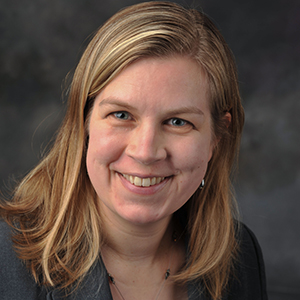
Louise Rasmussen is the Pacific Southwest Regional Senior Human Resources Partner with trane commercial H Vac sales and services.
She works with more than 600 associates across a highly diverse workforce in six states such as Arizona, California, Hawaii, New Mexico, Nevada, and West Texas.
Her professional background is in human resources, and she's originally from Vietnam. And it's great to have you here today, Louise. Thank you so much for joining us.
[00:01:55] Speaker B: So happy to be here, Amara. Thank you.
[00:01:57] Speaker A: Yeah, awesome. So, Louise, tell me what you do in your spare time. I hear you're about to hit one of your goals.
[00:02:04] Speaker B: I am actually, you know, besides having a wonderful family, a young daughter who's going into eighth grade, and my husband of 22 years, I am challenged every day. And I do a Orange Theory fitness class session about four to five times a week, including the weekends. And over the years, I've accumulated 800 classes, and I'm 200 classes away from my 1000 class mark. So very excited.
I would think that it would get easier over time, but it continues to challenge me. And I love showing up and just, you know, working out and keep moving, like, is very important.
[00:02:43] Speaker A: What do you get at that 1000 class mark?
[00:02:47] Speaker B: Anything. A T shirt.
[00:02:51] Speaker A: Got it. Let's dive right into the topic here.
So we're talking about, like I said, you know, the workforce.
So what steps does your company take to attract and recruit diverse talent to the mechanical engineering roles that train? That's a pretty big set of shoes to fill.
[00:03:12] Speaker B: Yeah, it is. And, you know, with the talent that's out there today in the market.
We are very much, you know, having to be proactive in our outreach. And that stems from a couple things. If you think about mechanical engineers or electrical, industrial, chemical, mechanical, right. You have so many diversities of engineering types and the type of schools that we will find that talent in the type of labor market that's out there, I think you have to be proactive and you have to do things such as have a team. So we have a dedicated talent acquisition team that really serves with our hiring managers and our leaders as well as our HR community to create actual programs. So an example of that early talent program for sales engineers. We have a five month program where they are just focused and we are compensating them to take that step of learning sales engineering. We have energy engineer programs for early talent as well as intelligence services engineers. So we're committed in the very front to help them learn in our environment.
There's so many initiatives, so many regulations and opportunities to better serve our customers and the type of technology we have today.
So I think getting them into a program where they can learn and then when they're ready to come into our field and provide those services for customers, they're going to be much more confident and our customers trust with them will definitely be much more confident as well. So you kind of have to start with the early talent. And we have internship programs, we have our sales engineering program and our energy engineer programs. And I think we have seen such a growth in the type of people that are interested in that.
And by going to different campuses and partnering with Society of Engineers, National Women Engineers and the National Society of Black Engineers, Women in manufacturing. So we have to be present, show who we are and our purpose in our business. And that really is, I think, helpful to attract people who today want to make a difference in our community, in our environment and to our customers.
[00:05:32] Speaker A: Certainly. And the train name is very well known, so that must help as well in recruiting with all these different societies or organizations too.
[00:05:41] Speaker B: It is, I think brand name definitely helps us. However, it's really our people that differentiates us. I think if you think about our efforts to really be a team that is diverse and also inclusive, our ability to innovate and collaborate really is transformative when it comes to having diversity of thought in our business. I think people are empowered to feel like they own a part of this business in their commitments and their purpose. So I think that's very important.
[00:06:13] Speaker A: Yeah. And speaking of leadership roles, what ways does your organization encourage that diversity for Mechanical engineers to participate in these leadership roles or decision making processes across the country and across the company.
[00:06:27] Speaker B: Yeah, great question.
I think the first thing that we start with is our leadership principles. So as trained technologies, we have seven leadership principles. And it is instilled upon all of our associates, not just our leaders.
And with those leadership principles, it's how we behave and act and collaborate together within our business and also externally.
So an example, work today for sustainable tomorrow. I think that's really important of who we are. We keep customers at the heart of what we do.
So we're always trying to do what's right for our customers, right for our people.
And then when we think about including uplifting each other and then making better happen, you know, really important, dare to do things differently. We own our decisions. And so we're really empowered to have the ability to make decisions for our customers and to come out and advocate for them. To advocate for each other, I think is important.
But when it comes to like leadership and I think about our development programs, we have these regional and national development programs that focus specifically on sales leadership and what we call area general manager leadership. And so there's nominations program, there's women in leadership programs. And I think these programs are great. They allow people to, to network with other leaders or aspiring leaders across the nation.
And the investment and the time, I think is just an amazing program. And we're always excited of the number of people that are interested to be a part of these programs.
When it comes to decision making, I think there's a lot of different things that we have. And you think about our sales engineers, they're critical consultants. So they often play a key role as an extended team member to their customers.
You know, they're understanding local regulations, the environment, the customer expectations.
And if you think about our energy engineers, you know, they're performing utility analysis benchmarking for facilities and campuses. And then they have the opportunity. Also every single employee across our organization has an opportunity to join any of our employee resource groups. We have Latino group, we have our pride group or veterans group.
And then I think finally we're always in the stage of continuous improvement.
So we have strategic lean programs, we do RIEs, we do A3s in the spirit of really trying to do best for our customers and again our people and make our business just a little bit easier to do business with. Right. So working through processes and how can we be more efficient and work better together as a team for our customers.
Right.
[00:09:13] Speaker A: So kind of changing topics here a little bit. STEM science, technology, Engineering and math.
Not as many people are going into STEM degree programs in college. The Bureau of Labor Statistics has gathered a lot of data about how there aren't enough folks graduating.
So can you provide examples of how TRAIN has put together community outreach programs to support professional development of, you know, diverse STEM education?
[00:09:44] Speaker B: Yes. So, you know, across our TRAIN Technologies campuses and facilities, I think there's a lot of local volunteering that goes on. I definitely want to share one with you that I feel has been just such a big part of who we are as an organization. So back in 2018, we started to work with Project Scientists, and, you know, Train Technologies is really supportive of the time that we spend to volunteer. An example of that is Project Scientists. When we started with them, we were hosting, and we've been continuing to host annual STEM events. And so they get to come to our campus. So we'll have students from a local elementary school, ages 4 through 12, and they get to come to campus. They've come to Davidson, they've come to La Crosse, they've come to our campus in Los Angeles, and they get to see kind of what we do. We've built solar kits with them. We built Solar Buddies, which is solar units, to really help reduce global hazards, Kerosene in our environment for third world countries to have lighting. And so the kids get to kind of see what we do. They get inspired.
And so I think over the course of the time that we've worked with Project Scientists locally, you know, we've had 345 young girls in the program, nearly 200 trained volunteers, and nearly 500 volunteer hours.
And Train Technologies actually has a commitment under their sustainable Futures to get us to 500,000 employee volunteer hours.
So we have, you know, annual paid volunteer hours.
And as much as fun as it is for the kids to be in these programs for us that we host with our STEM superstars, with our engineers talking to the girls, I think our employees get so much out of it, too.
So it's just a really great program that we always look forward to continuing to host and be a part of making a difference, to encourage young girls to see that they can do STEM and math and science and engineering and how enthusiastic. Because they are our future. So without them, it just, you know, wouldn't be as bright. And so I love the fact that we get to do this and be a part of this as part of our organization.
[00:11:59] Speaker A: Yeah, that's fantastic and very, very rewarding. Like you said. Excellent. Well, that was Louise Rasmussen on attracting, retaining, and developing talent at Train. And thank you, Louise, for giving us some terrific information about how your organization develops mechanical engineers.
[00:12:19] Speaker B: You're very welcome. Happy to share.
[00:12:21] Speaker A: For more information on workforce development and careers in the MEP industry, visit Consulting specifying
[email protected].
and don't forget to check in regularly to hear more from industry experts.
Thanks for listening and catch you next time.