Episode Transcript
[00:00:03] Amara Rozgus: Hello, and welcome to the Consulting Specifying Engineer podcast. I'm your host, Amara Rosgas, and in this episode, we are talking about data center cooling. This CSE podcast is about to turn three years old, and I'm happy to be here.
Let me introduce you to Daniel Gentry and Sarah Hilden, both from Trane Commercial.
Thanks, both of you for joining me today.
[00:00:29] Daniel Gentry: Thanks for having us.
[00:00:32] Sarah Hilden: Good to be here.
[00:00:33] Amara Rozgus: Yeah, yeah. And there's a lot of discussion about data centers, so this is a very timely conversation.
But before we start, here is some background about my guests.
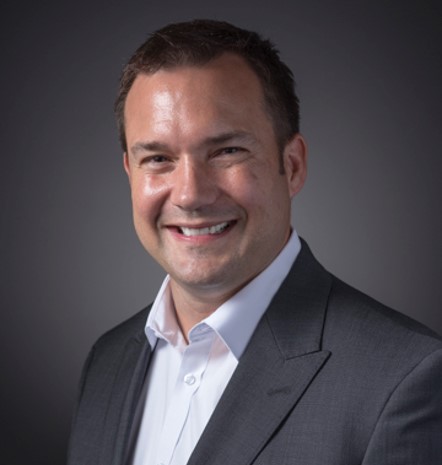
Dan Gentry is an applications engineer at Trane Commercial North America, specializing in chiller plants, heat recovery, and heat pump systems for complex buildings and industrial applications.
Sarah Hilden is an applications engineer at Trane who specializes in hydronic heating and cooling system design controls, and thermal energy storage solutions that support decarbonization through electrification.
All right, so this is a huge topic. Dan, I'm going to ask you the very first question here.
What are the most important early stage decisions that engineers should make when determining whether a facility is better suited to air cooling, liquid cooling, or maybe a hybrid strategy?
Yeah.
[00:01:33] Daniel Gentry: Thanks. It's all about what is being cooled, what technology is being cooled, and what the requirements are for those chips or those devices. So that is really what's going to drive what goes on in there. And, and if you know your customer type or what's being cooled, you can really pretty easily hone in on the correct type of system, be it liquid hybrid or air.
The challenging part, what we see is say, if it's a colocation and you don't know what your customer's needs are going to be. So one of the important things to do there is to.
Is to design your system with a lot of flexibility in mind. So thinking of a potential, say, temperature thermal range that your customers may operate in is really important. So you can't really say, I'm going to pick this design point and run with this, because I know my customers are going to say, have different operating conditions that I'm not thinking about. So having that flexibility in the system early on and thinking how we can maximize flexibility with those designs is really important.
[00:02:50] Amara Rozgus: Okay. Okay. So I guess I'll direct this to you, Sarah. As data centers pursue more aggressive efficiency targets, where do you see the greatest opportunity for energy recovery and what barriers still limit broader adoption?
[00:03:08] Sarah Hilden: That's a great question. And I'm going to start with the barriers, because when we think about a data center, it's generating a tremendous amount of heat. And in most Cases we're throwing that heat away and we're not using it for good.
So these data centers need to, need to team up or pair up with some other application that needs heat so that they can take that heat out of their data center and put it somewhere else. So we really need to have some kind of co location happening with some other industry that maybe needs heat. And we have all the equipments, the equipment and system designs to accommodate this. We know how to control these systems, but without a place to put that heat, you really can't do heat recovery.
[00:04:06] Amara Rozgus: And so kind of continuing on that thought process, how should engineers evaluate heat recovery opportunities in data centers without compromising that time, redundancy or operational simplicity? Dan, maybe you have some feedback on this.
[00:04:23] Daniel Gentry: Yeah.
So how they can do that is really with the design of the system. So if, for example, if they can use lower temperature hot water, say a temperature that would be typically that of a condenser used for a data center, then that means you can really use a typical or standard equipment or equipment that they're familiar with. So you're not adding complexity to the system there.
Also, if we're talking about rejecting heat, you know, we really are just going to be rejecting heat to a heat exchanger. So you know, I think it's pretty easy to contend that a heat exchanger is not more complex than a cooling tower or a, or a field of dry coolers.
So you know, I would say that's simple and that's reliable. Now the, the aspect of that, that would kind of be out of the control of the data center would be the load on the other side. So obviously the load has to be there for them to be able to reject heat. But in a data center you would still also have means of error, you know, say air cooled rejection. So you can still not compromise any uptime redundancy and operations of, of the system.
Now what you can do to potentially say further add complexity to the system is say if you have to want to, or if you want to produce a higher temperature hot water that maybe a standard piece of equipment couldn't do. And now you start adding in what we refer to as like booster units or cascade units, where you're adding in another heat pump to boost up the temperature of the water. So obviously now when we think about that, you're adding more equipment, more compressors, more complexity, more controls. And I would say, you know, achieving, yes, you can achieve that higher hot water temperature, but that does come at a risk to those, you know, uptime simplicity characteristics. Of the previous way to do heat recovery mentioned
[00:06:30] Amara Rozgus: and you, you kind of touched on this, Dan. But so I guess this is for you, Sarah. Engineers adapting cooling plant design to account for greater load variability, higher peak densities, evolving equipment plans. I mean, what, what does that look like?
[00:06:49] Sarah Hilden: Yeah, that's, that's a challenge for a lot of these designs. I mean, you can kind of pair the load variability with equipment deployment plans because potentially when you start up one of these AI factories, they might not be at full load right away. So they might be deploying some equipment at one point and some later. So one strategy is to deploy thermal storage within the plant for evening out those peaks. We need to make sure that we enable smart control.
Historically, H vac systems have been designed to react more slowly. We want things to happen at a slow pace. But in these data centers that's really not an option because we have to cool this equipment as it comes online. So, so that's going to be, that's, that's, that is a challenge and people are adapting control systems to do that.
In terms of, you know, say you're deploying a whole bunch of air cooled chillers in a data center, there's going to be concerns with chiller spacing. You know, we have to have certain amount of spacing between the chillers so that we can ensure we have adequate airflow. And they're rejecting a lot of heat, so that can cause a microclimate. So we need to ensure that we're designing for worst case, that we can forecast how much of an impact this heat rejection is going to have in the microclimate and ensure that our equipment is still going to function as, as those temperatures rise. And with that said, we, we need to fit as much equipment on the site so we've got footprint, we've got, you know, how much land is available.
Sound is another concern. Depending on where the, where the data center is cited, there may be other constraints at play with regard to the types of activity that happen in that area.
I worked on one that had covenants in this industrial park, so they need to make sure that they've covered all the bases as they're designing this. So, so design for the worst case and design for the best case.
[00:09:13] Amara Rozgus: Right, right. Really good points.
What role then, Dan, should economization strategies play in current data center design and how do climate use and reliability concerns affect those decisions?
[00:09:30] Daniel Gentry: So I would say economizing would be a, is a huge and a critical strategy for data centers, especially these AI factories and sites that are Using very elevated, I'm gonna say quote, chilled water temperatures. You know, you hear the talk of 45C and you know that's, that's a pretty high temperature for, for chilled water, which means that we can do a ton of free cooling.
Obviously the ambient is the, the driver there, the ambient and the size of your dry cooler field.
But that allows for tremendous amounts of hours of free cooling, which means you're not running compressors. So operationally that is, that is great. We're using less power to, to meet the cooling needs. Which is what I would consider, you know, being a good neighbor when you're a data center.
Like I said, the, the ambient temperature and then the chilled water temperature needed for the, the, the cooling, the chips are the, the critical factors. So you know, the higher the chilled water temperature needs are for the data center, the more hours they can do free cooling, meaning they have to use less, less power.
So locating in you know, data centers. We see a lot of data centers in desert climates. It still does get cold there and they still can do some free cooling. We still see data centers with lower temperature chilled water needs like in the 40s or 50s that operationally that is going to use a lot more power to do cooling because there's fewer hours to do free cooling.
The water use one that, that's a big one that I would say that's not really just related to free cooling. That's such a big item issue concern with, with data centers. And I would say, you know, doing closed circuit or dry coolers for heat rejection as opposed to evaporative cooling towers is the, is the solution to alleviate that concern.
[00:11:38] Amara Rozgus: Right, right. So looking at this from a slightly different angle, Sarah, how should engineers approach the trade offs between water cooled and air cooled systems when owner priorities include efficiency or resilience, maintainability or maybe local resource constraints?
[00:11:57] Sarah Hilden: Yeah, that can be a challenge for
[00:11:59] Amara Rozgus: a lot of people.
[00:12:01] Sarah Hilden: There's really two high level things to think about.
If you're going to go with air cooled chillers.
It's a little bit easier. Right. As long as you have enough outdoor space, they're easier to deploy because you only have the chilled water loop to deal with in terms of the hydronics. But on the flip side, water cooled chillers are typically higher capacity than air cooled chillers. And so that can enable for larger building blocks which can help reduce the number of machines.
So that can be beneficial to have fewer pieces of equipment to service and maintain.
But then you have to include the use of water in, in an open condenser loop, there's going to be makeup water that has to be added.
There's increased maintenance, but that adds system flexibility. And maybe it's not a, maybe it's a closed loop with, with dry fluid coolers.
So then you know, you don't have as much water being consumed and it could be across with adiabatic fluid coolers. And, and with that said, if you have this condenser loop, then you pretty much have built in free cooling. Right. You just have to make sure that you can, you have controls and, and you may have multiple or, or individual heat exchangers depending on, on how it works.
Sticking with the condenser loop concept, now we have to also put towers outside.
Maybe there are space constraints, we can stack them taller.
There's, there's a lot of different customizations that are available for these types of equipment. So as I go on and on about this, there is no one single answer to which system is going to be most efficient. Right. It's going to depend on the location, it's going to depend on the technology that's selected. It's going to depend on the rating points and the climate. So electricity is a big deal right now when it comes to data centers. There's, there's concerns with impacts to consumers. So the takeaway is that we want to reduce the amount of power needed to remove that heat and still maintain the right performance levels to. And that goes both ways. Right. It makes the data center use less energy, which impacts the rest of that grid, you know, less. But from the data center owner point of view, the less power they're using to cool, the more power they have to sell their services to people that want them.
[00:14:44] Daniel Gentry: I just want to add that, I love that answer, Sarah, and that is such a hot conversation right now with these customers is like how to navigate that. And I loved your answer.
[00:14:59] Sarah Hilden: Thanks, Dan.
[00:15:02] Amara Rozgus: Thank you. Actually summarized it in a perfect phrase, it depends. So that makes perfect sense.
Awesome. Awesome. All right, so Dan, this takes us back a little bit to a couple of questions ago. How are you adapting cooling system designs to support both current rack densities and then the higher thermal loads for maybe AI or some other high performance application?
[00:15:28] Daniel Gentry: Yeah. So I guess similar to start off like Sarah's previous answer, I would look at this in two parts as well. So the first part of that would be from a technology point of view. So things like chillers, CDUs, fan walls, that kind of stuff, we've started, we've created, we've designed and deployed data center specific chillers. So what that really means is those are chillers that are capable of operating at higher chilled water temperatures than a, say a convent H vac chiller. So typically the maximum chilled water temperatures for those units is in like 60 to 70 degree range. But we have, you know, customers asking for 80, 90 and even over 100 degree chilled water. So we've had to design machines that are capable of doing that. At the same time. For looking at air cooled chillers, we, they want to be rated at higher ambient conditions for warm climates and also to say, be able to operate in microclimates when the operational ambient is increased at the condenser.
So we're looking at, you know, ambient designs for 135, 145 degree ambient. So those would be, you know, products or chillers that are specifically designed for those customers.
We've purchased the liquid stack, so we have a CDU line available now for liquid cooling. We've developed fan walls, so we have various sizes available for those needs. And then we also have craw units available. So there's products that we have. And then I should actually not forget controls is, is the piece that ties all that together as well. So there's, you know, pieces of equipment that specifically serve these customers. And then the second piece of that would be from a system design perspective. So we've started to develop, we call, were called reference designs or you could kind of think of them as like a system blueprint. So what those are doing is putting all those parts and pieces together in a full system showing, you know, how you line up the, how you would size and size your chillers and your blocks, how you put those pumps together, how you put the dry coolers together, your pumping configuration like a decoupled system, how you handle different temperatures, different temperature loops. So we're going through all of those things to help design that system and then also optimize the system. What are ideal temperatures and Delta T's so you can say reliably and efficiently operate the system.
[00:18:14] Amara Rozgus: Sure. So let me take that one step further for you, Sarah, talking about efficiency.
How is your team approaching efficiency improvements in data center cooling without then compromising redundancy or maintainability or uptime expectations?
[00:18:31] Sarah Hilden: Well, Dan kind of covered a lot of that in his last answer. So thanks for that, Dan.
But in terms of, you know, on a design, on a per project basis, some of the key things that, that we're doing today in data centers are very similar to what we've been doing for many years in conventional cooling systems where we're Looking at higher Delta T's to reduce flow rates and pumping energy.
Developing technology so that we can achieve higher condensing temps to increase capacity and extend performance of, of fluid coolers in the system.
I touched on adding thermal storage to systems earlier in terms of redundancy. That is a very cost effective means to add some redundancy and be able to deal with load fluctuations. Maintenance is pretty straightforward with those with the addition of thermal storage.
And that can also, you know, be a backstop against when something bad does happen. If you need to go to generator power, you know, if there's not enough there, maybe running thermal storage for a little while might, might help improve uptime for, for a specific data center because that's, that's crucial for these data centers. I was at a conference a couple weeks ago and I heard that I don't know if I should name names, but there was like, I don't remember how many hours it was. I think they said it was something like 15 hours of downtime and it cost them $5 million. So we need to be thinking about how we can create systems that are going to be resilient when, when there is a potential outage that's going to happen and what we can do to mitigate the impact on those end users.
[00:20:28] Amara Rozgus: Well, it sure sounds like you both eats, sleep and breathe this topic. So this is pretty awesome.
But you can't possibly do this all the time. And summer is upon us. So Dan, what do you do for fun in the summer?
[00:20:44] Daniel Gentry: So we're, we're a pretty big boating family. We, we're here in lacrosse Wisconsin which the Mississippi river runs right through.
So we're up, we're a pontoon family. Back in 2020, my wife convinced me to get a pontoon and I was kind of against it at the time and I was wrong because it's been one of the best purchases we've ever made. So we just moved slips this year. So our slip used to be about 20 minutes, about a 20 minute drive from our house and now our slip is about a four minute drive from our front door. So it's awesome to easily get out there and all of our friends have boats or pontoons and so it's just a great, great way to spend a weekend with a whole bunch of kids and families playing games on the sand. Boating, you can't beat it. So that's usually where you'll find us in the summer.
[00:21:40] Amara Rozgus: I'm jealous. I'm very jealous.
Sarah, what about you? What does your family do in its Free time.
[00:21:48] Sarah Hilden: Well, we're coming out of the end of football season here.
We've got a couple weeks left of matches. Our son plays club football, and by that I mean soccer.
Couple matches in Madison this weekend, so we'll be traveling there and then next week it'll at least be over for a little while. But the summertime is going to bring more golf. We're a golfing family. Our son has discovered golf in the past year and he thinks that he should be a par golfer.
I don't know. I know many 12 year olds that are, but that's what he's rooting for. And I gotta say, Dan, I am surprised to hear that Amber wanted the boat and you were against it because you love your boat, man.
[00:22:36] Daniel Gentry: I know. That's what I said. I was, I, I will admit I was, I was wrong at the time. She was right. I always said, you know, have your friends with boats is better. And she wanted us to have her own program. So. Thank you.
[00:22:49] Sarah Hilden: And you just said on a, on a nationally recorded thing that she was right.
[00:22:55] Amara Rozgus: Yeah, right. Seriously, this is a red letter day.
Well, thank you, Sarah. Thank you, Dan. I do appreciate your insights here.
[00:23:09] Sarah Hilden: Thanks for having us.
[00:23:12] Amara Rozgus: Excellent. Well, this is where we need to wrap things up. Data centers are front and center for so many engineers. So for more information on the topic, please visit consulting specifying engineerscmag.com and don't forget to check in regularly for new podcast episodes. Thanks for joining us and we will be back again soon. Bye. Bye.