Episode Transcript
[00:00:00] Speaker A: Foreign
[00:00:03] Speaker B: hello and welcome to the Consulting Specifying Engineer podcast.
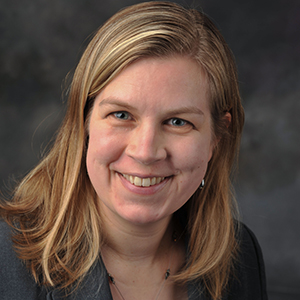
I'm your host, Amara Rosgas and today we are talking about drives with Eric Lang. This CSE podcast is on episode 50 now. It's hard to believe that I've spoken to so many different experts, so it's great to have you, Eric. No pressure. Number 50 is no pressure.
[00:00:28] Speaker A: Good morning, Amara. Thank you for having me on.
[00:00:31] Speaker B: Awesome. Awesome. Yeah. And there is a lot of discussion about drives for a variety of different building systems. So I thought I'd talk to an expert on this topic.
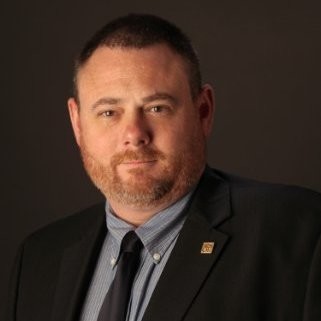
Eric Lang is Product Manager H Vac at Yaskawa. High creativity product manager with a passion for project management.
Eric leverages more than 15 years of power electronics background to deliver continuous improvement, technical excellence and growth in the low voltage drives market space.
So Eric, with increased emphasis on energy benchmarking and performance transparency, how are drives contributing beyond simple speed control?
[00:01:17] Speaker A: Good question, Amara. The fundamental thing that a variable frequency drive brings to the efficiency discussion past that, that that basic use of variable speed where you can turn a pump or motor faster, slower to save energy, is that the drives allow you to implement in addition to that fundamental different motor types. So in the old days you had one choice which was an induction motor. Nowadays you have other choices such as permanent magnet and synchronous Reluctance motors and VFDs allow for support of those more energy efficient technologies.
In addition to the motor type choices, it also allows for specialized tuning for application and for motor. So motors come with characteristics that are recorded by the motor manufacturer and that information can be input into the drive itself for improved efficient operation.
And then the these. The one thing that you're also seeing in addition to selecting different motor technologies and the programmability of the drives themselves. And that fundamental power equation of being able to control the speed is you're seeing combinations being tested with specific energy efficiency functionality that's built into the drive itself. So these form kind of a constellation of energy efficiency options that would not be available without a variable frequency drive.
[00:02:55] Speaker B: Okay, and one of the hot topics is of course, mission critical facilities right now. So what are some best practices for ensuring drive reliability in these mission critical facilities like a hospital or a data center?
[00:03:09] Speaker A: Yeah, there's two really big characteristics that you should consider is the quality of the drive manufacturer itself. Not all variable frequency drives are created equal and there's opportunities for selection among manufacturers and some of those have history and processes in place to support a quality of drive that would be optimized for those more reliability focused installations.
And then in Addition to drive selection itself as a function of quality, there's also redundancy designs. You see this in water and wastewater, where they have pumps that just have to run. You know, you just can't have the water stop moving. So instead of having one drive, they'll have two drives or three drives. And if a drive fails, then it goes to the second choice. And then they often rotate between using them so that they all experience the same amount of, of hours of usage so that one isn't being worn out while the other ones are just sitting there doing nothing. And that redundancy setup is something that different manufacturers optimize for. And that's an important question when you're looking for those hospitals or other high reliability applications that you dig into.
Experience with redundancy, what kind of packaging that they offer, and then the fundamental quality of the drives themselves.
[00:04:36] Speaker B: So that brings up kind of a different question. What role should the drive manufacturer play during commissioning? For example, in a complex project,
[00:04:47] Speaker A: there's a couple of different ways of looking at that. When you're looking for commissioning, you want to have a frictionless commissioning experience.
And the foundation, kind of the legs of the table that you call that frictionless installation.
One of them is going to be the quality of the drive. And how do you define quality? Because it's such a nebulous term and it's really as the person, the customer doing the installation, that you're having a positive experience with. The first drive that you install, the 10th drive, the 100th drive, the 1000th drive, you're having that consistent experience and that's something that's really important when you're looking at what drive you're going to use.
Quality tools and documentation when you're doing an installation and there's some aspect of the installation where you're like, I don't know about this, or I don't know about that. And being able to look in documentation and readily get that piece of information, I think that's an important part of it. I've installed a lot of things over the years, drives and others, and it is always a terrible experience when there's just this one thing that you're not really sure and you want to look it up. And then it just becomes very difficult to get that information.
And then from a tool standpoint, things have really improved over the years. And all drives now are going to come with an option for a laptop based software package interface with the drive.
And those tools have.
Some tools are more intuitive than others and I would encourage People to look into the different options. But fundamentally, having that tool already installed, being familiar with it ahead of time, so that when you're doing your install and you're going for that frictionless startup, that you're not fumbling with the tools themselves and you stay focused on the installation.
And then finally, frictionless startups require frictionless tech support.
And when you're doing that startup and you need, sometimes you just need to talk to somebody that's done it before. And having a frictionless tech support, which is, you know, not a fee, not a subscription, you just pick up the phone and call somebody, get somebody who is knowledgeable, provides that support readily to keep the installation moving forward. And those are, those are really the outstanding items that I look for when I'm doing an installation is do I have all of these things available and ready to go?
[00:07:12] Speaker B: Well, then, it sounds like you're trying to simplify things a lot.
Are there tools or diagnostics within modern drives that simplify startup or verification, for example?
[00:07:24] Speaker A: Absolutely. There are some really cool options in modern variable frequency drives to help support setting up and observing and modifying operation of the drive itself. The starting out is the laptop software that's available. Every manufacturer is going to have their own variation of this. You're going to want something that's intuitive, straightforward, installs easy, operates easy, updates easily, connects into the networks easily, and is also visually intuitive.
But fundamentally, that laptop software is going to be your starting point. And then variable frequency drives now have saveable setup files. So once you set up a drive, you can save those files and then download them to a replacement drive. Or if it's parallel operation with multiple drives using the same files, you, you can take that file and just download it into multiple drives. Addition to that, many drives have the ability to save variations on that file on the drive itself. So it's really interesting. All the tools that are available, you don't just have to fumble with a small keypad on the face of the drive anymore. You can have a full laptop sitting on a table and work through the drive. In addition to that, drives now often support powerless setup. So you can open up the box, take out the drive, connect your USB cable from your laptop to the drive. Your laptop will now power up the drive sufficiently for you to flash new firmware onto it or change parameters on the drive itself and then save those files. Which means you can have a drive out on a floor, industrial floor, operating.
And then when you want to have a spare on the shelf and you don't have to set that Spare up on a factory floor anymore. You can just take that in your office, open the box, connect your laptop, download it, set it up, put the. Close the box up, put it back on a shelf. Now it's ready to go. So if something happens on third shift, there's no struggling to find someone to set the drive up. It's already ready to go and can be walked out and one taken out, root unwired, and the other one wired in.
And, you know, there's. There's some other small things there, but those are really the big ones. It's the. The available software. Now the fact that the setup files for. For drives are just like files on your computer that you can save and that this. This being able to power the drives themselves with the laptop without having to connect it to. To primary power.
[00:10:03] Speaker B: Yeah, so that definitely simplifies things. Okay, thank you.
So you piqued my interest when we were chatting before we started this.
I love to travel. I've been to some really bizarre and far flung places. But you take it the next step further.
What's the farthest place from land in all directions and why? Do you know this?
[00:10:28] Speaker A: Yeah, this came up.
So there's a place called Point Nemo. It is the place in all the oceans of the world that is furthest from land in all directions. It's in the South Pacific, and it is a thousand miles. The closest land is a thousand miles away in just one of the directions. I mean, it's just. It's so incredibly remote that places like NASA use this as the graveyard for satellites because if they crash a satellite, it's so far away from where anyone would be. It's. It's the safest you can get. I know about this. I write fiction and fiction novels. And I needed a place to dispose of something where nobody could ever find it. And my research led me to Point Nemo. So, yeah, if you want to go someplace where very, very few people are or have ever been and you want some alone time, Point Nemo is the place for you.
[00:11:23] Speaker B: Wow. Do they have their own landing strip? That does sound kind of amazing.
[00:11:29] Speaker A: The point. It's. It is. So if you were in a boat going 30 miles an hour, it would take you a day and a half to get there. Like, there is nothing there. It's southern Pacific Ocean. It is like, closest land is like Antarctica. I mean, you are in the middle of nowhere.
[00:11:47] Speaker B: Wow. All right, that's. That's incredible. That sounds like maybe it'll be a future trip for me. Thank you, Eric. I appreciate the insights.
[00:11:57] Speaker A: Thank you Amar. I really appreciate your time and being able to participate.
[00:12:02] Speaker B: And this is where we need to wrap things up. There have been a lot of questions about H Vac system efficiency, motors and drives, so for more on this topic, visit consulting specifying engineer cscmag.com and don't forget to check in regularly for new podcast episodes.
Thanks for joining us and we'll be back again soon.