Episode Transcript
[00:00:00] Speaker A: Foreign.
[00:00:04] Speaker B: Hello and welcome to the Consulting Specifying Engineer podcast. I'm your host Anna Steingruber and today we are talking with Forrest Sakoski, the Commercial Marketing manager for data centers with Eaton. In today's episode we'll be discussing trends and innovations in data centers. Data centers are often very energy intensive facilities and can have specific codes, states, standards and considerations compared to other building types. When dealing with data centers specifically, it's important that engineers are knowledgeable about all of the current best practices.
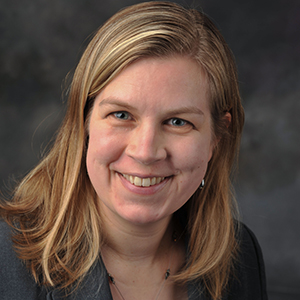
Now I'd like to introduce our guest. Forrest Sakosky is the Commercial Marketing Manager for Data Centers at Eaton and lives in Raleigh, North Carolina. Prior to this role he was also the strategic lead for modular solutions including substations, data centers, power assemblies and NOVA reclosers. Welcome to the podcast for us. We're very glad that you're here.
[00:00:58] Speaker A: Thank you Anna for having me today.
[00:01:01] Speaker B: Awesome. I think we'll just go ahead and jump right into these questions and start learning all about data centers. So can you tell us based on your research or data, what does an electrical engineer need to know when designing a new data center or retrofitting an existing one?
[00:01:17] Speaker A: Thanks Anna. When it comes to designing a data center these days, it really extends beyond just the equipment that goes into the facility.
As we think about companies goals these days related to sustainability, resilience and potentially even having revenue generating assets, there's a lot to think about as far as the systems and the digital tools that could go into play with the equipment that's being deployed.
When Eaton approaches designing and helping work with consulting engineers in the market, we do a lot of research. We recently partnered with s and P Global's 451 research group in a study called the Intersection of Digital Transformation and the Energy Transition.
And in that research report it pointed to the important role that new energy business models and improving the way data centers view and manage power needs as operators, they change as operators seek to improve sustainability.
More and more operators data centers, they're they're looking to find ways to save money or to improve their carbon footprint based on their sustainability goals.
And so that's why it's really important for an electrical engineer to think about what goes into the data center, whether that's the actual carbon footprint and and the emissions that are created when that product's delivered to the site or the operating requirements or maybe it's just the overall system that's monitoring it as the facility evolves and becomes operational.
[00:02:58] Speaker B: So what do you think are some of the key trends or innovations in the Data center technology that will have a big impact on the electrical grid in the years to come. And how do you think that consulting engineers contribute?
[00:03:10] Speaker A: Sure. As mentioned before, digital tools are becoming a larger part in a data center operator's toolkit.
Already these data centers, we think of the hyperscale customers that are out there.
It's natural for these customers, these really large customers, to try to utilize digital tools to monitor and optimize their operation.
Think of things like generative AI and the power demands that are going to be on these data centers in the future and the additional power loads. That's definitely a trend that we're seeing as far as how it's going to shape what's to come of the data center industry.
That's probably one of the biggest impacts that's going to be had on the electrical grid when we think of the increased power consumption of a data center.
So one of the ways that a consulting engineer can help just balance the need for that increased data center's appetite for power is through a monitoring suite such as Bright Layer Data Center Suite. Eaton has had a monitoring system called Bright Layer for some time, and we are currently launching new modules within that data center suite this year, toward the end of this year that actually target performance management, remote monitoring, and a host of other digital capabilities in a single platform.
A lot of these digital tools are not only there to help an operator review the actual day to day performance of that data center, but really to predict what's going to happen. And I know that it may seem hard to predict what might fail in the future as far as the dataset goes, but we actually have a lot of diagnostic tools embedded in this suite of solutions that can help predict when say a capacitor on a UPS might fail or a fan might fail. So you can actually schedule service calls in advance. That's called our predict pulse platform and that's going to be embedded in Bright Layer. So there's a lot of ways that consulting engineers can really think of the actual digital tools and embed those with the equipment as they think about starting up and commissioning these sites with their data center customers.
[00:05:33] Speaker B: So then how do you balance the need for reliable, high quality power in data centers with the need to reduce energy consumption and carbon emissions at the same time.
[00:05:43] Speaker A: Sure, we're thinking of some generator alternatives when we think of this, this topic here, when we think of reducing energy consumption and carbon emissions, Data centers of the past have really been heavily reliant on diesel generators to increase the resilience of those sites and to guarantee the uptime.
But they're also trying to balance carbon emission goals.
Eaton is as well. We have our own carbon emission goals for the future.
And how do you do that? So you have to think of other solutions that could potentially provide the same or better performance with just a different design of the data center.
That might be battery energy storage systems, it could be micro grids, it could be even a UPS serving as a bi directional asset connected to the grid, selling power, or helping the utility balance frequency on on their network in a revenue sharing generation module.
We do have the capability with our three phase UPSs that we've demonstrated with a couple, you know, key customers in that area of that bi directional power flow called Energy Aware.
So the ability to actually have a more resilient system without generators or without the heavy reliance on generators is definitely possible through the new battery technologies and the systems that are, that are out there these days.
[00:07:24] Speaker B: And with that, how does Eaton approach sustainability and environmental responsibility in its work with electrical engineers who design data centers? And what steps are being taken to reduce the environmental impact of all of these facilities?
[00:07:37] Speaker A: As we mentioned, the new trends, such as generative AI and additional computing loads that we see out there in the market with data centers, we know that the demand's going to be higher and that the stresses and strains of trying to optimize the operation are going to be potentially tougher.
But as we've noticed, some studies over the past data centers have done a really good job of maintaining power consumption as a percentage of like total worldwide power over time in a constant manner. And what I mean by that is from 2010 to 2018, I remember reading a study where data center power consumption increased negligibly over that time across the country as a percentage of our country's power.
And when you look at it as a percentage of power, it's really only like 1 to 2% of our nation's power.
But as we look forward to some of these new trends like generative AI and the demands that are increasing at a faster rate than some of maybe the cloud computing and other trends that we've seen in the past, we really have to work closely with our engineer partners to design power management strategies more sustainably and keeping sustainability as a top priority to guarantee that uptime.
As we mentioned earlier, thinking about the scope 1, 2 and 3 emissions, we have to get better at actually tracking those. And so Eaton's working really hard to make sure that we're tracking our scope 3 emissions in the actual products that we have and how we're delivering to our customers.
But we also believe that just the way that data centers are positioned in the market with the battery assets that they have on site and the ability that they have to kind of work together with their utilities through systems like our Energy Aware ups, we really believe that they are positioned to actually help utilities more than the utilities actually know right now in a sense of seems like right now data centers are really just asking for more power from the utility, but not really offering maybe much in return.
And we see that really changing in the future where data centers can actually come to the table and offer something to the utility to actually help offset some of those additional power demands. So I really think that in the future these data centers are going to actually be able to provide a lot more value to their utilities in their region and really be able to work well together with engineer community.
[00:10:23] Speaker B: Yeah, I think that that is all we have for these more heavy kind of questions. But before we go, I wanted to ask you something a little more fun. Forest, you've mentioned before that you like to work with your hands. Can you tell me some of the things that you've been working on more recently?
[00:10:39] Speaker A: Sure. I definitely feel like my stress reliever is really just either, either wrenching on something or building something. I more specifically I enjoy learning and kind of doing, getting, getting my hands dirty in the, in the act, both at work and, and at home.
And as I thought about this a little bit in a sense of what was fun and, and challenging for me recently as, as we entered the pandemic, I decided to add on a screen porch to my house and my wife encouraged me to try it myself. And so I actually had a mechanical engineer design structurally what this was going to look like.
I pulled permits and then I, I put together bill material and sent it off to local building supply company and had all the material dropped off.
And I think my neighbors thought I was really crazy to have taken on this project myself. But I just kept telling them, I have a plan, I've done my research.
What else is it going to take? Just, just pick up a board, pick up a nail, pick up a hammer and, and take one at a time, take one step at a time.
A few months later, the porch was done.
And that was right about the time when, you know, Covid came around to March 2020, things were closing down and I had my final inspection on the project and we were all sent, sent home. And it was now kind of our family's new oasis in our backyard, our new screen porch. I was really proud of what we'd accomplished there and, and just kind of the timing of it because we also think of other trends in the industry at that time. Building supplies went through the roof supply chain wise, and I was very thankful to have secured what I needed for that project a few months before the craziness of the pandemic set in.
[00:12:41] Speaker B: Yeah, that's incredible. And perfect timing to be able to enjoy a beautiful back porch in the spring weather in the midst of the pandemic. So that's awesome.
[00:12:50] Speaker A: Sure. It was. It was great.
[00:12:53] Speaker B: All right, well, thank you so much again, Forest, for coming to talk with us today and for sharing all of your expertise. It's been really great to have you.
[00:13:00] Speaker A: All right, thanks for having me today, Anna.
[00:13:03] Speaker B: And thank you to everyone else for tuning in to this episode of the Consulting Specifying Engineer podcast. For more information on data centers, you can find articles and resources online at www.csemag.com. we'll catch you next time, and thanks for listening. Bye.