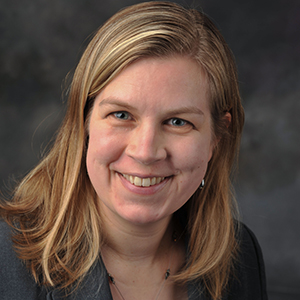
[00:00:01] Speaker A: Hello everyone and welcome to the Consulting Specifying Engineer podcast. I'm your host, Anna Steingruber and today we are talking to Brian Alessi from Henderson Engineers. In today's episode, we'll be covering implementing decarbonization strategies and building design.
So as building owners and companies are working towards sustainability goals, discussions around decarbonization are becoming more and more common. Today's episode will focus specifically on tackling direct emissions and decarbonization strategies.
And to do this, I would like to formally introduce our guest today. Brian Alessi is the Sustainability Director at Henderson Engineers, which is a national building systems design firm. He has more than 20 years of sustainable design experience and Brian is a key member of the company's technical leadership team and is responsible for leading efforts to create building systems that are healthy, sustainable and resilient. That's all really awesome stuff and welcome to the podcast, Brian. We're happy to have you.
[00:00:57] Speaker B: Thanks Anna. It's great to be here with you.
[00:00:59] Speaker A: Awesome. So I think we're just going to jump right into some of our hard hitting questions. So to begin, can you tell me what are the primary challenges in implementing decarbonization strategies in building design and construction today?
[00:01:12] Speaker B: Sure, yeah.
I think the biggest thing we're facing right now, the big challenge is the pace and scale at which we're being asked to make a change. So we're basically being asked to undo 170 plus years of cumulative carbon emissions in less than 20 years. It's, I guess similar to being asked to land a plane on a football field. That's how fast we have to come to a stop.
And last March, the chair of the UN Governmental Panel on Climate Change emphasized the same idea. And he said we're walking when we should be sprinting, so we need to act even faster than we're acting today. But know at the same time, the good news is that we have everything we need to tackle decarbonization. The, the UN report that came out in March noted that there are feasible, effective and low cost options out there today. So there's, that's the hope, that's the, that's the thing that we have to keep in mind as we're working towards this together and trying to accelerate the, the pace of change.
And that exponential change that we're talking about really relies heavily on awareness and education. Right. Capacity building.
And that means to me, we need to get people excited about this and, and get past the, well, what if mentality that holds people back from, you know, actually doing the action.
I, I feel like this should be as exciting as sending somebody to the moon. It should be. This is, that's the magnitude of, of change that we're trying to seek and it should be exciting.
That's overall, I guess, speaking mostly if we narrow the lens down a little bit and focus on operational carbon instead of embodied carbon, scope 1 and 2 and 3 emissions. If we just focus on operational carbon and the challenges that lie within the realm of most engineers.
If I had to pick three things, the first one would be it's kind of obvious it's heating in cold climates. So when we're talking about decarbonization, we're talking about eliminating the use of combustion fossil fuels in buildings. And so that really puts a damper on how we manage building systems in cold climates. Is there one solution? Is there one silver bullet? There is absolutely not.
Is there a design solution for every location? I believe so, yes.
But that solution is going to be a result of good design that emerges from, emerges from a well informed collaborative process.
It takes a team to do it all. I won't go into too many the details of the.
That's probably a separate podcast and a whole separate series about how to heat in different cold climates. But I think that's one of the, the big primary challenges that we're all facing. The other is the big one out there is existing buildings. We have, we have about 6 million existing commercial, commercial buildings in the U.S.
the new construction that we're working on only makes up about, it's like less than 2% of building activity every year. So we have huge amounts of outdated technologies in these existing buildings out there. And that means we have a lot of work to do. So I guess, you know, the good news is there's a lot of existing buildings. There's a lot of work to do if we're going to focus on decarbonization. And you know, we all, we could all have a part to play in that. I guess the third thing I would focus on is, as always, awareness, education and training. Just like anything else we learn in design and construction, we, we just need to keep building capacity within our organizations and among our clients.
And I guess the problem is based on the first thing I mentioned about pace and scale, is that we need to build that capacity fast. So we need, need to figure out how to get education and training up and running as quickly as possible.
One thing that I think helps and that I try to do is to work within existing structures that are already built up in an organization. So for example, we have at Henderson of fundamental training classes that operate throughout the year. And inserting the decarb pieces and the decarb training and technical expertise into that existing training structure is efficient. It reduces the, that administrative drag of trying to set up something new in a company that's 100 plus people.
We also, so that's like our internal solution and how we meet some of those challenges and getting us up to speed and building that capacity.
We also have client relationship directors in our structure in each of our sectors and they're that natural link to build awareness with our clients so we don't have to hire anybody new to manage the clients and bring that, you know, education and awareness to them. We just need to build up that knowledge base of folks that regularly interact with our clients.
So, you know this. I'm not trying to make it sound like it's easy and you just have to, you know, flip a switch, but it does avoid some of those barriers or getting that information out to the right people in a expedited process. It's not like flipping a switch. It definitely takes time and patience.
It took me in my, one of my other jobs, it took me five years to move a housing developer to build to passive house standards. But that was seven or eight years ago. So there's seven or eight years of good building that's happening since then. It seemed, it, you know, at the time that five years seemed like a lifetime, but it's happening now. So that's, that's just the speed of progress sometimes.
One thing I think I want to leave out cost to this list of challenges. Yes. Yeah, it's a factor just like anything else. But if we assume, if we just blankly assume it's going to cost more, it's going to cost more and many people will just stop right there. They'll see the dollar sign or a barrier and they will just stop and do the status quo. Are there low cost solutions out there? Yes, but they're, they might just be outside our current knowledge base and that's why that education piece is so important.
My other thought is that if you want to decarbonize, you're going to plan for it. It's, if it's really a priority, then it's going to be included in the budget. Just like budgeting for electricity in the building. We don't ask people if they want to budget for, you know, having electrical service in their building anymore. So I think those are, I want, I always like to stay away from the cost piece of it as the major challenge because I think there it's, it's one of those things that is easily overcome with the right people and the, and the, and the right attitudes in place.
[00:07:31] Speaker A: And so how do you prioritize between all the various decarbonization strategies when you're designing a new building or retrofitting an existing one?
[00:07:39] Speaker B: The most benefit comes from knowing exactly what your clients value and what your stakeholders really put a lot of their value in.
When you align the client values and their climate commitments with their budgets, it's really, it almost becomes self evident. So there's, there's nothing worse than coming in with a polished game plan, sitting in front of the client and then realize the client's playing a different sport. That's terrible. So one of the things we've tried to, to develop that, to avoid that, that conflict of, you know, what we're bringing to the table as our message versus where the, where the client is finding real value is it's a, we just call it the Sustainability Value Ident survey. It's long name for something that we sit down with the clients and have them filled out and it just ranks sustainably focused elements on a simple scale of 0 to 4. Zero being, no, we don't want this in a project, we have no interest and four being it's mandatory. So that helps us prioritize our design effort around the client values as well as identify where we might have to spend a little more time on education or awareness. So for example, we use this with a client that is, was all about zero carbon.
And so within that value survey, it reinforced the fact that they really were dedicated to zero operational carbon, but not so much on the embodied carbon side of things. So it showed us, okay, this is definitely a priority, here's the operational carbon goal. But at the same time, if we're looking at carbon and decarbonization holistically, then we might have a little bit more work to do on the embodied carbon side of things. So that really helps. So yeah, the, that value exercise is super important. I also think it's, it's really important to have the right actors as part of the process and part of the program. So I like to, I like to say we need building doctors and building drivers. So just like a doctor looks at your medical history, they do an examination, you might need an X ray, they might give you a prescription that's kind of the same as how we treat commissioning. So Henderson Buildings Solutions, part of our Henderson companies, they're our building group, they have a commissioning group and we look at just like a Doctor we go into the building, we look at the history, the utility data, the BMS data, we look at the schedule data. We actually perform a building audit. We go in there and we take photos of the equipment to show us, you know, to remember certain things and just be able to analyze it at a deeper level.
We interview the operators to understand how it's being, the buildings are being operated. And then we provide the report, the prescription and the recommendations and the expected outcomes, how we make this building healthy, how we make it better, how we decarbonize it.
So, you know, that uncovers how the building's been used and what shape the existing equipment is, is in. And then there's the, who's operating it. So that's the building driver. So think of the, like, there's a building operator that's like an F1 driver with a whole group behind them looking at telemetry. If you have that driver in place and you have a team that's constantly looking at the telemetry to optimize the performance of that car, that building, we can analyze that data. We have tons of data from meters and sensors available and IoT devices, probably more than we know what to do with. So the question is, how does that driver and that team, how do we use that data to inform how to really optimize that building and drive down decarbonization over time? We worked on a project with a large mid Atlantic university, and after looking at the utility data, the operational data and doing a building audit, we found that one of the buildings we were analyzing had a boiler that was probably 15 years beyond its life expectancy.
And it was, gosh, it was probably 60% efficient. And so what we did through all this analysis and looking at, you know, the, you know, being the doctor and being the driver, we decided one of the solutions to, to, to decarbonizing this particular building was to remove that old boiler, which was a mess, and put in a temporary boiler on a skid, plug that in and let that operate. So we're not totally decarbonizing, but we're reducing the emissions right off the bat and we're saving energy because it's, it's much more efficient. So it's a temporary solution until we can. It's like putting a band aid on it, but it paid for itself and it reduced the carbon emissions right away, day one, by a dramatic amount. So there's all that that was through this whole organization of being a doctor and a building driver, you can do that.
And prioritized by having the right tools for the right job. That F1 driver doesn't need a scalpel and the doctor doesn't need a speedometer. So what are the right tools to have in the toolbox to do the right analysis? Depending on what your job is in decarbonizing.
So at Henderson, we have this, this entire ecosystem of tools to do an analysis and get the right information in front of the decision makers when we're trying to decarbonize. So what we have to first understand what metrics do we need to generate? Is it first costs? Is it operational costs? What are the, what are these values that the client's really going to key?
Is it life cycle costs? Is it environmental impact? Is it risk resiliency, carbon? Is it just a matter of like looking at the electrical service size? So we had one client that they're a global shoe retailer that want to electrify all their retail outlets in the United States and they have a climate commitment in place to reduce their emissions by like 65% by 2030. And we had the tools in place to do that analysis. So what we eventually had to figure out was, yes, we can. There's roof space, there's, you know, everything is in place. The one big question was, is the existing service size suitable to retrofit these gas rooftop units with a heat pump rooftop unit? And so we looked at 46 stores and only two of them needed a service upgrade to actually retrofit with heat pump all electric rooftop unit systems. So it's, you know, it's just having those right tools in the right place at the right time to manage and analyze and get the data in the right place at the right time.
[00:13:56] Speaker A: Yeah. And so kind of speaking of that relationship with the clients and building those priorities, what questions or discussion points should engineers focus on during these kinds of conversations with clients to ensure that all parties are on the same page regarding decarbonization goals and how they can achieve them?
[00:14:14] Speaker B: Yeah, it goes right back to the client value exercise. Right. Like speak to your client's values.
Once you understand where the client identifies value, the conversation gets easier and it's typically more productive. So this is, as the decarbonization organization work out there has, has become more and more common. I we're doing from a sustainability standpoint, we have to spend less of our time doing sales and more of our time finding solutions, which is great. That's what we, that's where we want to spend our time.
So, you know, I guess what, what have we encountered within those conversations?
I think one of the things that is tricky, I guess when we're, when we're talking about having conversations with clients is I think you have to, you have to come ready to be a Mythbuster, but you have to tread lightly among all the minefields, the politically charged minefields out there. So we had one example was we were in the project interview and the client asked us about electric being dirtier than gas. And they said, the grid's dirty, why should we decarbonize?
And we just focused on, we got away from all the divisionary language and we just focused on like, here's what the, here's what's driving the development of utility scale electricity production and it's renewable electricity production. So it's market forces that are driving the development of utility scale renewable energy production and storage. So we kind of demonstrated that, you know, here's the market, here's what's happening at the utility scale. And just explain that, you know, solar and wind are like $40amegawatt hour compared to a new gas plant, which is about $60amegawatt hour. Or if they want to talk about nuclear, that's like $160amegawatt hour. So it's just the market that's driving these things. And it's not as, you know, there are other pieces of the puzzle, of course, but we try to make people feel comfortable with, if you make this move, it's not going to be more detrimental. And so we just break down those myths and avoid the minefields. The other big thing obviously is we have cost conversations all the time. So you just have to do your homework. And I say just, it's not as easy as, again, like flipping a light switch, but you have to have that full life cycle cost thinking in mind. What are the upfront capital costs? What are the operational costs? What are the maintenance and replacement costs? What's the cost of capturing all the low hanging fruit? And then what's the cost to, to pick that harder to reach fruit that's higher up on the tree?
We have to know what the utility rate trends are and be able to have an informed conversation around what the long term utility outlook is.
What are the rebates, incentives? How can we help, you know, have that conversation with clients about how rebates and incentives can help them. There's databases out there, there's help, there's people who know about it and experience folks that can, you know, confirm whether or not certain incentive programs are the right fit and where do you get the most bang for Your buck. So going back to that, that old boiler example that we, we suggested putting in this temporary boiler on the skid. So we had to convince the university that, and it was easy, we had to convince them that investing that 100, $175,000 in a temporary condensing boiler, which is much more efficient as an asset that could technically be moved from building to building, after it was used in that one building, over the 60 buildings on the campus, it would save, we estimated, about $86,000 in utility and offset costs per year and eliminate every year 200 metric tons of operational CO2. So it was a win, win. And after two years, that asset that they purchased, that condensing boiler, paid for itself. But it wasn't permanent. It only stayed until we had the time to go into the rest of the building and replace the airside equipment that was built for 180 degree water.
And we had to transition that to equipment that was built for, that was, that could work off a heat pump system eventually and lower temperature water at like 140 degrees. So it's outside the realm of how we usually retrofit buildings when we're matching piece for piece. And it's not as simple as just taking one piece out and another piece in. But that's the, those are the discussion points and those are the conversations we have to have, you know, an investigation we have to do behind the scenes. One of the best pieces of advice I ever got was don't make the financial decisions for your client, especially in sustainability. Somebody told me, rather show them what's possible, show them what good design looks like.
So I think sometimes we make the decision right off the bat like, oh, it's going to cost too much or they're, you know, they're not going to go for that.
And just recently we're working with a client on a zero operational carbon manufacturing project. And we wanted to show them just to understand the amount of energy that this is going to be, this facility is going to be using. We show them like, here's what a 100% on site generation looks like. And it was 17 acres of PV.
And we told them, we talked to them about, you know, in order to do this, there's a three year process to get it going to get a substation installed by the utility company. And you know, we just figured this wasn't even going to happen. But what did happen was the client said, you know what, let's plan for this three years down the road, let's start that three year process today. Because we just happen to have 40 acres nearby that we could potentially do this with. And this was totally unexpected. So that was one of those examples where, thank goodness I heeded that advice, like where I wasn't making that financial decision for the client because you never know what you can get when they're driven by sustainability and they want it improve, you know, what they're doing and do. Right. It just worked out. I think the other conversations we have and the discussion points is really, we're involved more now with connecting the dots between the corporate decision makers and the project decision makers. So there's a plan in place at the corporate level and then it has to be executed at the project level. And the process that getting from A to B there has been sometimes difficult. So we've all heard these commitments of, you know, I want to be net zero operational carbon or whatever by 2030, 2040, whatever the date may be. But putting that and how to execute that at the project level is the challenge. So many times we'll win a project and that's based on the corporate decision makers. But then when we get to the project level, sometimes those corporate goals don't get translated. And so we have to work hard to make sure that the corporate goals are being met at the project level. And sometimes it doesn't work out. We've had projects where we won a project based on proposing an all electric building had on site renewables, energy storage, thermal storage, and then once it got down to the project level, it ended up with gas and it didn't have all these decarbonized systems and renewable systems in place. So we really have to focus more on getting staff trained on the why and the how to help connect those dots.
I also think there's something to be said for what questions we don't ask and the things that we don't bring up in conversations. So, for example, like we don't ask clients if they want indoor plumbing anymore. Right.
And for certain projects we're not asking a client, hey, do you specifically want gas or not?
We have four rooftop units in climate zones one through three. We have a policy in place that they will be by default heat pump units. And we came about that policy by understanding that that's technically feasible.
The cost impact is not that great to switch off from a mixed fuel system to an all electric heat pump system and within those climate zones is technically feasible.
And there's enough out there, there's enough manufacturers in the market to provide those at competitive prices.
So we just don't ask those questions anymore. If a client wanted that and they demanded it, there's not much we can do at that point. But it takes that question out of the matrix and we don't have to ask that anymore. And we just go with a default. And that just helps the whole process.
[00:22:30] Speaker A: Yeah. And can you tell me what role you see emerging technologies playing in achieving building decarbonization goals?
[00:22:36] Speaker B: Yeah, I think that, I think we often want to solve the problems that technology has brought us with more technology. And I just, I think of John, you know, ask John Connor how he thinks, how he feels about Skynet. We have to do the foundational work. We have to, you know, still look at passive systems. We still have to do our load reductions. We still have to focus on efficiency, renewables and storage.
And you know, as far as like emerging technologies that the things that are emerging don't necessarily have to be new. There's continued improvement of existing technologies. So renewables are getting better, they're getting cheaper. Energy storage is getting cheaper.
Micro grids are one of those solutions out there that really helps diversify our energy consumption and how we manage demand and look at things on more of a micro scale.
Demand management is huge. Virtual power plants are a thing and that's managing demand. So instead of building a new power plant, we're actually using the storage that is happening at a local or regional level to pump energy into the grid when production is a little bit lower. So we have a battery at our house and we get a notice that, hey, there's a virtual power plant event coming to your house at from 5 to 6pm do you want to participate? And we say yes. And so it's cheaper for Soquel Edison to link this net of virtual power plants, these people who have energy storage and discharge that to support grid demand, then to build an extra power plant. So there's these little things that are happening that I didn't even anticipate that program happening when we initially had things installed. But it's just, it's continued improvement of these existing technologies and there's so many resources out there to use. There's, you know, ASHRAE has a grid interactive building guide for decarbonization. RMI Rocky Mountain Institute has a ton of resources on decarbonization. NREL is a good source. There's a building decarbonization coalition out there.
The William J. Worthen foundation has a bunch of resources on decarbonization. And some of them are 101 level and some of them are, these are deep dives into the Technical pieces of how to decarbonize and how to have the conversations. So it's how to build the awareness and education among your teams and your clients.
I think I have to talk about data.
And just because we have so much and so many emerging technologies are being built around data. It's, it's since Halloween wasn't that far off, it was like trick or treating. So my son went trick or treating and you know, he sat down with all his friends and they dumped their candy out and you know, we have all this candy. What are you gonna do with all this candy? It's like that with the data right now. What are you gonna do with all data and how are you going to use that data to push decarbonization? So there's so many opportunities out there. We can do predictive analytics with that data. So we know approximately like when certain things are happening, when we can sense vibrations and belts and realize that, you know, that can send off an alarm to your maintenance staff like hey, this is going to break, this belt's going to break and you should replace it or to save energy and downtime, or you can anticipate an energy outage.
Maybe there's a storm coming and you realize like there's a high probability that you might lose energy. So don't discharge the battery or your energy storage systems. Store it up for that potential emergency. There's the whole realm of digital twins and understanding how to connect building telemetry and all that sensor and meter data to a screen in front of you to understand how that building is operating and to make continuous improvements on those buildings. So there's so much in that arena that we're working towards. I also really in that same realm of data, there's the potential to seamlessly report ESG data to clients. So like for example, California just passed Senate Bill 253 in October and it requires companies doing business in California that make over billion in annual revenue to report their scope one and scope two emissions. So that's their basically their electricity use and their any other fossil fuel use or on site combustion that they're using. So it's their utility bills essentially and translating that into the carbon impact and the greenhouse gas emissions. So we have the ability to seamlessly gather that data and then push it into reporting formats like this to really ease the effort and make it seamless from, from building operation to this reporting formats. And there's you know, the pending SEC climate related disclosure rules that are sitting out there that at one point in time will be Most likely rules that companies in the United States will have to follow. So it's. That's happening out there, and that's data driven.
I also really appreciate what's going on in the data world around environmental product declarations. So there's information more and more. So this is getting into embodied carbon a little bit more. But we have a tool now where designers, as they're designing in revit, can lay out a length of ductwork, and it will calculate the amount of carbon associated with that particular layout. And so we can now use carbon as a metric to determine the efficiency or the utility of that particular design strategy. That's really exciting to start to understand the carbon footprint of what we're designing and how different design moves will impact the total carbon portfolio of that building. So those are really interesting things and exciting things that are happening.
And I would be remiss if I didn't talk about refrigerants at all, especially in the MEP space. So there's this race to natural refrigerants, especially systems that use CO2 as a refrigerant, which has a much, much lower global warming potential than a lot of the refrigerants that we've been using over the course of time in our systems. And my own personal favorite is I really enjoy induction cooking.
So I just. I'll put that plug out there. Induction cooking is great. It's fun. I hope more people fall in love with induction cooking because it's one of those simple things, either at a residential scale or commercial scale can make a huge difference. So, you know, I think that's one of those emerging technologies that's.
That's just fun. It's so personal to people, cooking and eating and decarbonizing through that process.
[00:29:14] Speaker A: Yeah, this has been great. But I have one more question before we go. So you are the only licensed architect at your engineering firm with over a thousand employees. Can you tell me what that is like and what is challenging and what's rewarding about that?
[00:29:29] Speaker B: Yeah, it's been a winding path to get here, for sure.
When I graduated college many moons ago, I. I had this idea like, I want to be a Renaissance man. I thought that was really cool reading about Leonardo da Vinci and how he was Renaissance man and had all this. This wealth of knowledge across different fields. But I didn't really realize what it was going to, what it took and how it kind of messes with the traditional career paths because I. I spent five years teaching in New York City out of college. I spent five years running an Art school in San Diego. I spent 15 years at an architectural firm.
Architectural firms, and then I spent five years at engineering firms. So it's been a long, winding road. It is challenging and it's rewarding at the same time. So what I hope that I bring to Henderson and to the project teams and clients that we work with is this. This holistic mindset to the company. I hope that that diversity of my career experiences enhances the work we do and the culture that we're building, not only internally, but externally among our client and architectural partners. And I like to think, I don't know, I could totally be wrong on this, but I feel like I have that capacity to bridge the gap between our engineers and our architect clients. So I kind of. I've been on both sides of that fence, and I kind of speak the same language. So I hope one of the things that's helping out Henderson is that that ability to translate and understand where each position is coming from. So hopefully that helped. Helps make a build a better world.
[00:30:59] Speaker A: Yeah, well, I'm sure it does. And I think that's a really cool story, a way that you've gotten here today, and we are very glad that you have taken that path and that you could have been here today talking to us about all of these decarbonization topics and building design. So thank you again, so, so much for being on the podcast today. This was a wonderful conversation.
[00:31:18] Speaker B: Yeah, thanks, Anna. Thanks for having me. I appreciate your time.
[00:31:21] Speaker A: And to our audience, if you want to learn more about decarbonization or any other sustainability initiatives and visit Consulting specifying
[email protected]. thank you so much for listening, and we'll talk to you next time.